The Ultimate Iceland Winter Packing List

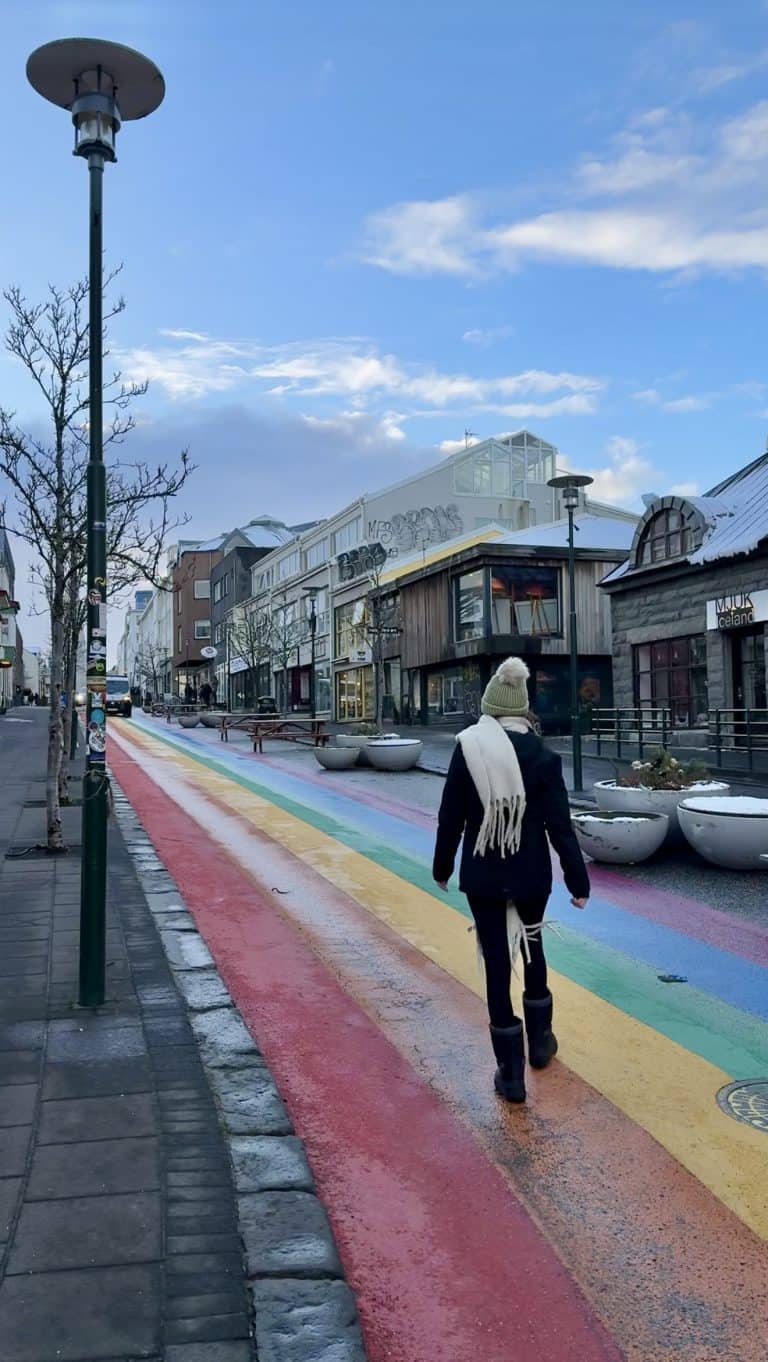
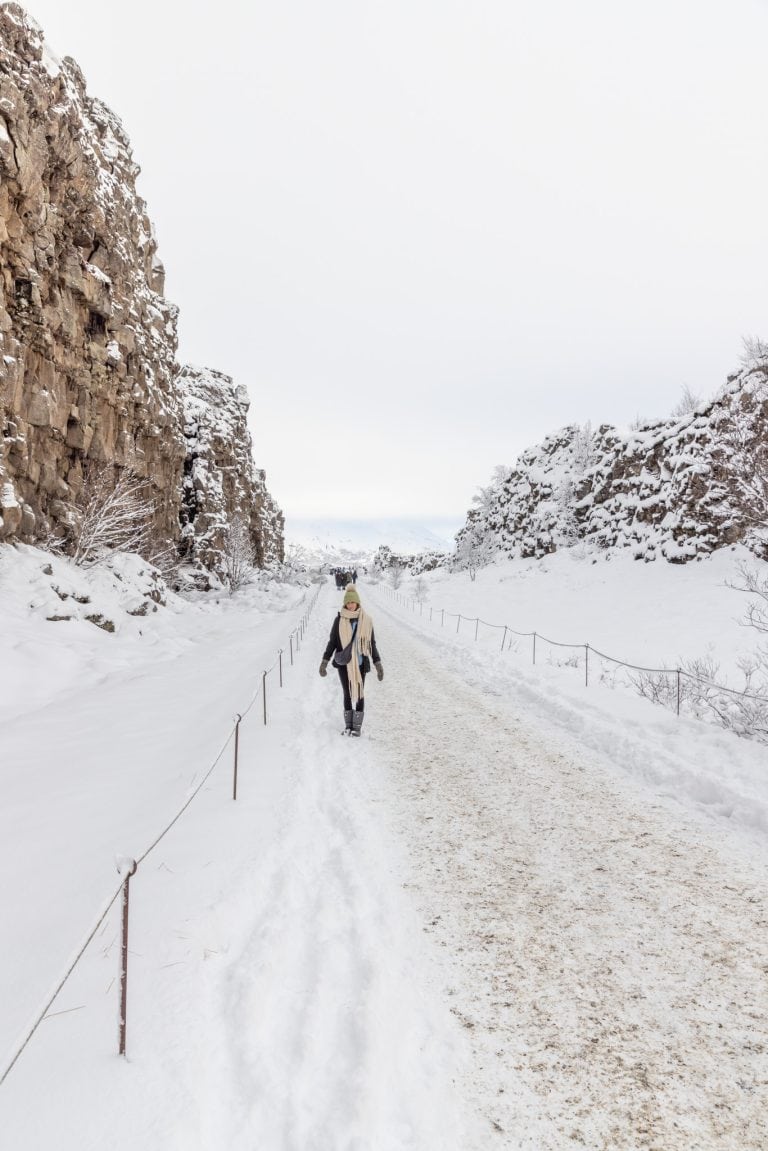
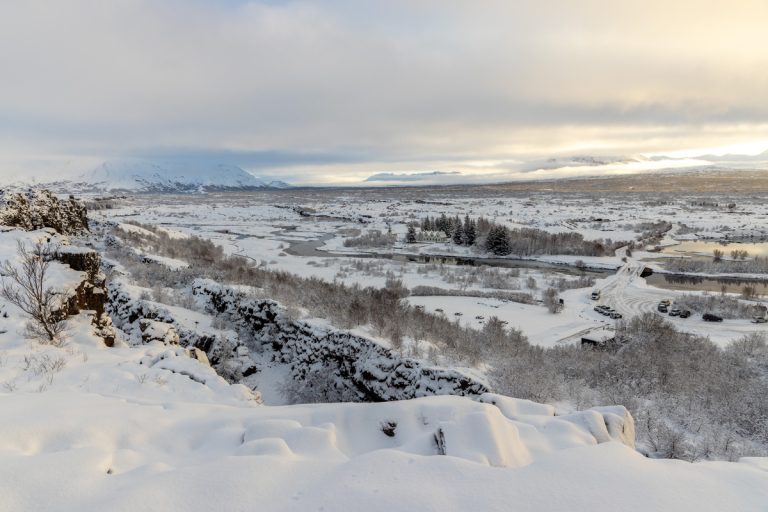
The weather is very unpredictable throughout the winter months in Iceland – during my seven days there, I experienced bright sunshine, snow, torrential rain and winds.
The key is to pack layers that you can easily add or remove depending on the weather, as well as good waterproofs and snow boots that keep your feet dry.
I’ll take you through everything I took with me to Iceland in February, including clothing, accessories and some essential items that will make your trip a lot smoother.
Iceland winter packing checklist
✔ 2 x Thermal layers
✔ Waterproof coat
✔ Fleece
✔ Snow boots
✔ Swimming costume
✔ Thermal socks
✔ Snood
✔ Hand warmers
✔ Gloves
✔ Trainers
✔ Flip flops
✔ Plug adapters
✔ Sunglasses
✔ Reusable water bottle
✔ Backpack
✔ Towel
✔ Wooly hat
Checking the weather in Iceland
Usually when you’re packing for a trip, you’ll check the weather in advance and choose your clothes accordingly. Don’t bother doing that for Iceland.
The weather changes constantly, there were times during my trip where I’d be looking at blue sky straight ahead of me, and there’d be rain to my left.
You might wake up to bright sunshine, and one hour later be in a snowstorm.
Regardless of what the weather forecast says, what you pack shouldn’t change. You need to prepare for every eventuality, so you’ll need to bring everything on this list with you.
Once you’re in Iceland, if you do want to keep an eye on the weather, I’d recommend using Vedur.is (the Icelandic met office). I found this to be the most accurate forecast during my trip.
How to dress for winter in Iceland
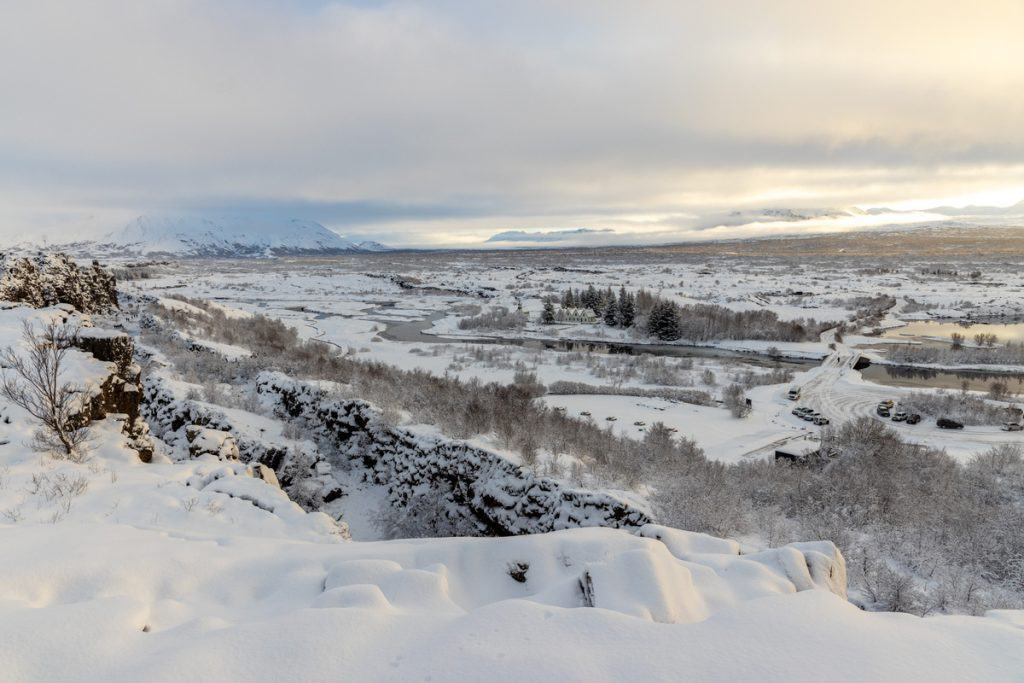
The average temperature in Iceland during the winter months ranges from around -2°C (28°F) to 3°C (37°F), but the crazy Icelandic winds can make it feel a lot colder.
The key to staying warm here is layers. You want to be able to easily add or remove clothes as the weather changes, and packing layers on will help you keep nice and warm on the freezing cold days.
It’s always better to be too warm and take things off than to be freezing cold with nothing else to wear!
Base layer – thermals
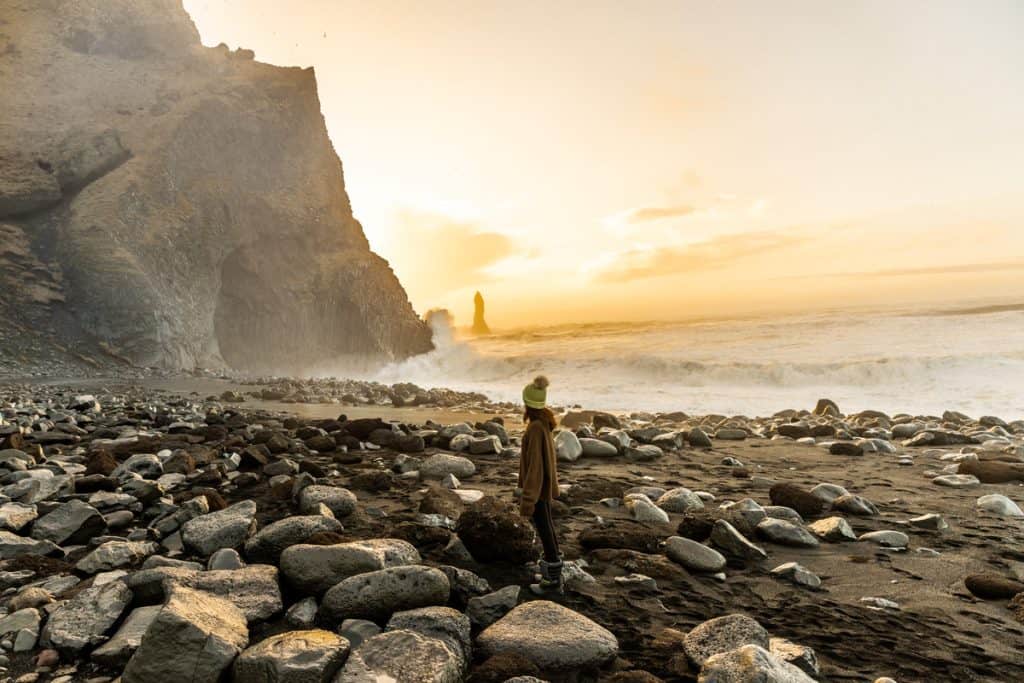
A good thermal layer is arguably the most important thing you’ll pack. It’s your first defence against the cold and if you choose them well, you’ll stay toasty all day, even in the extreme Icelandic winds.
Depending on how long your trip to Iceland is, I’d recommend taking a couple of pairs of thermals. They’re the closest thing to your body so they’ll be absorbing all of your sweat.
A lot of information online will advise you to get Merino Wool thermals, because they’re the best at keeping you warm, and preventing any smell from your sweat. BUT, they are also the most expensive option.
I had the these leggings and this top from the UNIQLO HEATTECH range and they were perfect. They kept me really warm, they didn’t smell, and they were half the price of Merino Wool.
The only material you should definitely avoid for your thermals is cotton. Cotton traps moisture which will make you wet and cold. It’s really bad at keeping you warm so steer well clear of it.
Don’t become so obsessed with having the best of everything that you bankrupt yourself! Iceland is a very expensive country so you need to save your pennies.
Mid Layers – fleece
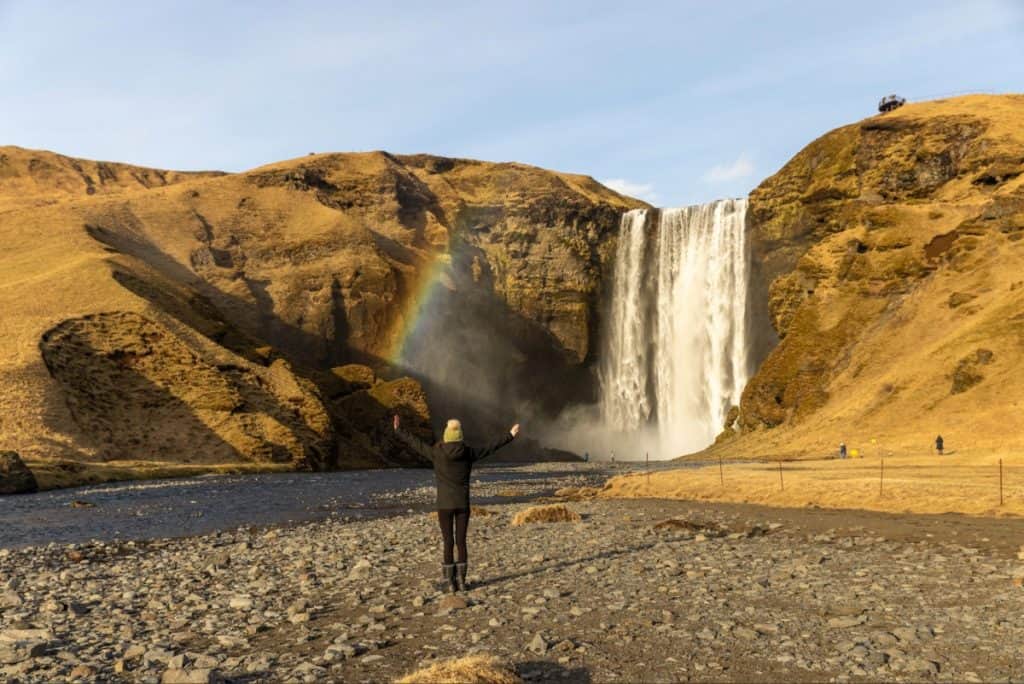
Next, you’ll want a cosy mid layer. I have a fleece from Columbia which kept me really warm even when I was out late at night searching for the northern lights.
Fleece is a synthetic material that dries quickly and does a brilliant job at keeping you cosy.
It’s also lightweight and easy to pack away if you get too hot. There’s a huge variety of fleeces to suit every budget, so they’re another affordable option.
Outer Layers
Your main defence against the cold, rain, snow, sleet and wind is your outer layer, so you want to get this one right.
For both your jacket and your trousers, check to make sure they’re fully waterproof (water resistant is no good).
Your outer layer doesn’t actually need to be that thick, as your base layer thermals and mid layer fleece will be keeping you warm. Your jacket and trousers are there to protect you from the weather, not keep you warm. Something like this is perfect. This is very similar to the jacket I had.
You’ll also need a good pair of waterproof trousers. I’d recommend searching for ski trousers as they’ll be the most resistant against the weather. These trousers are a great and affordable option.
Snow boots
After your thermals, your shoes are the next most important thing you’ll pack for your trip. Get this one wrong and you’ll end up with wet, cold feet that will be pretty impossible to dry if you’ve got a day full of activities planned.
Look for boots which cover your ankle like these ones. This will stop any water getting in if you’re walking through deep puddles.
I have tiny feet so I bought these Columbia snowboots which are actually designed for children. They do adult sizes though, so if they’ll fit you I can’t recommend them enough.
They were SO comfortable, they felt like slippers on my feet, I genuinely didn’t want to take them off when I got back home. Plus, I was wading through water and my feet stayed bone dry and toasty.
If children’s shoes aren’t an option for you (lol), I’d recommend the Columbia Bugaboot (the adult version). These will do a brilliant job at keeping your feet warm and dry.
Thermal socks
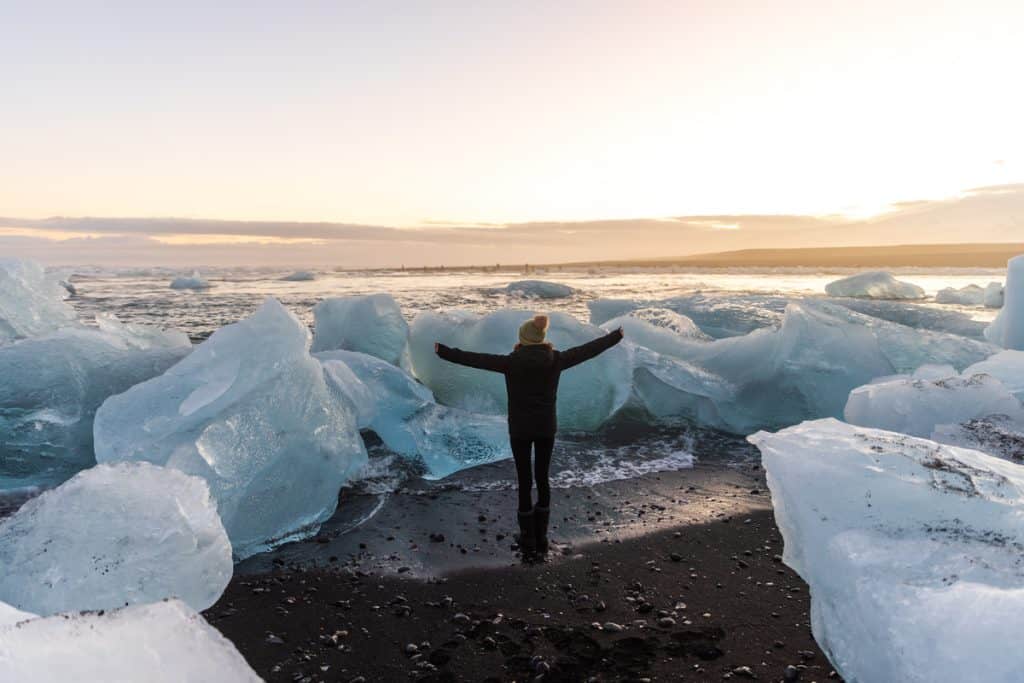
Thermal socks are another key part of staying warm during winter in Iceland. Socks, alongside your snow boots, will keep your feet dry and warm even when it’s freezing cold outside.
Make sure you pack a few pairs as there’s nothing worse than smelly socks!
A hat
It goes without saying that a wooly hat is an essential item in your suitcase.
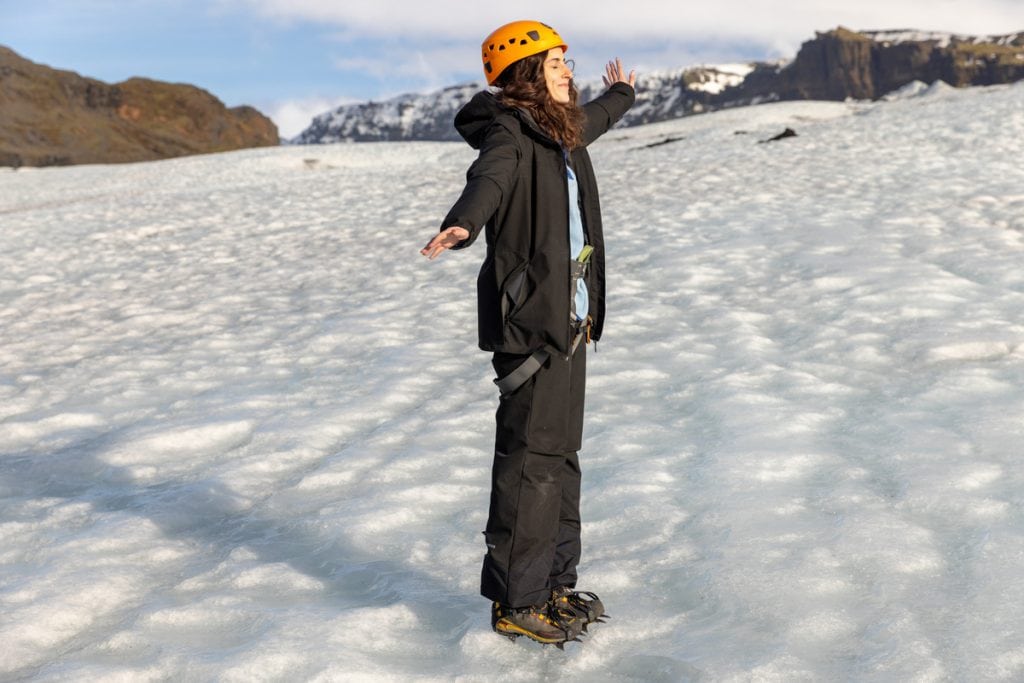
I’d recommend choosing one without a bobble if you’re planning on doing activities like snowmobiling, glacier hiking and exploring ice caves. You’ll need to wear a helmet during these activities, and if your hat has a bobble on, you’ll have to take it off.
Or, choose a headband that covers your ears and can also sit underneath the helmet.
A snood
A snood is a MUST. The Icelandic winds are no joke and having one of these around your neck will help protect you from the elements.
Choose one with a drawstring so you can pull it extra tight around your neck. This paired with your wooly hat will keep you super snug.
Gloves
Gloves are another essential. Make sure they’re waterproof gloves because cold, wet hands are not fun.
You might be tempted by the thinner wool gloves that let you use your phone at the same time, but I wouldn’t recommend them because the minute your gloves get wet, you’ll have freezing cold hands and it’ll be really difficult to warm them up again.
Hand warmers
And on the topic of cold hands, these hand warmers are a life saver if you need to warm up quickly. They’re air activated, so you just take them out of the packet and they’ll begin to heat up.
It takes around twenty minutes for them to warm up, so I’d recommend opening them before you go out on an activity, otherwise you’ll be sat around waiting for them to heat up. Once hot, they stay warm for up to twelve hours.
Swimming costume
A swimming costume might feel like a bit of a strange item for freezing cold temperatures, but Iceland is famous for its incredible hot springs.
They’re the perfect winter activity as the water is naturally heated to around 38°C, so they’re great places to warm up when it’s freezing cold outside.

I visited Hvammsvik Hot Springs and the Sky Lagoon during my trip to Iceland.
Both were absolutely beautiful but I preferred the rustic feel of Hvammsvik – it’s surrounded by stunning mountain landscapes and is located right on the ocean so you can do a cold plunge before warming up in one of the eight natural hot springs!
I’d recommend booking your slot for Hvammsvik in advance as tickets do sell out!
A towel
If you’re planning on visiting a hot spring, make sure you bring a towel with you, otherwise you’ll get charged around £5 to rent one.
These microfibre towels are best as they don’t take up much space in your suitcase and they dry much quicker than normal towels.
Flip flops
I’d also recommend bringing a pair of flip flops or water shoes for walking around the hot springs, as some of them are pretty rustic and the ground can be quite uneven.
I take my Birkenstocks everywhere with me as they’re so comfortable and really well made, they’ve lasted me for years!
Plug adapters
Depending on where you’re travelling from, you’ll need plug adapters to charge your electrical items. Iceland uses plug types C and F (the same as the majority of Europe), with the two pins.
If you’re travelling from the US, it’s worth noting that the voltage in Iceland is 230V, so you may need a voltage converter for items like hairdryers, straighteners and razors.
If you have a lot of electrical items, I’d really recommend getting an extension lead. It has five USB slots and three plugs, meaning you only need one adapter to charge everything. I’ve had mine for years and I wouldn’t travel without it, it’s a total game changer.
Sunglasses
As volatile as the weather is during winter in Iceland, you can still get beautiful sunny days.
Plus, the sun is much lower in the sky, so if you’re driving around, it’s much more likely to cause glare which can be very distracting.
Trainers
As well as your snow boots, I’d recommend packing a pair of comfortable trainers for wearing around the hotel, and to and from the airport.
If you’re visiting Iceland towards the end of the winter months, you might not see too much snow, so you could wear your trainers instead of snow boots.
Backpack
Make sure you’ve got a small daypack with you to keep your essentials in. I have this one from Osprey and it’s the perfect size for day trips.
If you’re bringing a camera or any expensive electrical equipment, I’d also recommend packing a waterproof backpack cover. This will keep your belongings dry if there’s unexpected rain (which happens a lot).
Reusable water bottle
The tap water in Iceland comes directly from the natural springs and glaciers, and it’s some of the cleanest in the world. The bottled water in the shops is exactly the same water as what comes out of the tap, you’re just paying for a plastic bottle.
So make sure you pack a reusable water bottle that you can fill up from a tap on the go. I have this one from Stanley, which I love because it keeps the water freezing cold for up to ten hours.
A portable charger
You’ll probably be out for around ten hours each day in Iceland, and your phone battery will drain even quicker in the cold, so make sure you pack a portable charger to keep your phone charged, you’ll be taking a lot of photos!
Do you need crampons for winter in Iceland?
Crampons are small metal spikes that attach to the bottom of your shoes to give you better grip on snow and ice.
They’re pretty cheap to buy, but unless you’re planning on going on a lot of snowy trips, I wouldn’t bother spending your money on them just for Iceland.
You most likely won’t need them for day to day activities, and if you’re booked onto a tour where they’re required, you’ll be given them to use.
I visited Iceland in February and the only time we needed crampons was on our glacier hike, where they were provided as part of the tour, so it would have been a waste of money buying them for the trip.
And if you arrive in Iceland and decide you really want them, there are shops in Reykjavik where you can rent them.

What to wear in the evening in Iceland
Usually when I’m on holiday I’ll pack “fancier” outfits for the evening to wear to dinner, which usually consist of dresses and heels or sandals.
Don’t bother doing that during winter in Iceland. I’d recommend wearing exactly what you wear during the day, especially as it gets even colder in the evenings. There’s a very relaxed vibe in Iceland – it’s completely normal to go to dinner in your waterproofs.
If you’re visiting in November or mid February onwards, you might get away with trainers instead of snow boots, but I really wouldn’t recommend heels, as you’ll be sliding around all over the place.

Can I wear jeans in Iceland in winter?
It’s not a good idea to wear jeans during the winter months in Iceland, as they’re made from cotton, which will absorb water from the rain or snow, and stay wet all day. Instead, choose thermal leggings and waterproof trousers so you’re protected from the elements.
How to dress to see the Northern Lights
Chasing the Northern Lights is a huge part of visiting Iceland in the winter months, and you could be outside for a long time waiting for them to appear, so layers are essential. Make sure you have a thermal base layer, a fleece mid layer, and a waterproof outer layer (coat and trousers).
What is the coldest month in Iceland?
January is the coldest month in Iceland, with temperatures dropping to -3°C in Reykjavik and -6°C in the highlands. January is also when you’ll experience the most extreme winds, as well as storms and heavy rain.
Iceland winter weather
Winter in Iceland is from November until March. The weather changes quite a lot month by month, so depending on when you’re visiting, you might want to bring extra layers, or leave some at home.
Iceland weather in November
November in Iceland is a transitional month from Autumn to Winter, so the weather can be quite unpredictable. The average temperature is between -1°C – 4°C (30°F – 39°F), and you’ll probably experience rain, snow, sleet and strong winds.
If you’re visiting in early November, you can expect around seven-eight hours of daylight, but by the end of the month, you’ll only get about five hours of daylight! Although this means you’ll have less time for exploring during the day, it’s great for spotting the northern lights!
Iceland weather in December
In December, the temperature in Iceland gets even colder, ranging between -3°C – 2°C (30°F-39°F). December also has the shortest days of the year, with the winter solstice happening around December 21st, when there’s less than four hours of daylight.
You should expect a lot of snow during December, so if you’re hiring a car, be prepared for the roads to be covered in snow and ice. December is a great time to visit Iceland if you want to experience the christmas markets!
Iceland weather in January
January is the coldest and windiest month in Iceland, with average temperatures of -5°C – 2°C (23°F to 35°F). It’s often snowier than December, and you’ll probably experience snowstorms.
The days are starting to get longer, with around five-six hours of daylight.
Iceland weather in February
February sees slightly warmer temperatures than January, averaging -2°C to 3°C (28°F to 37°F), and the days will be a lot longer. By the end of the month there’ll be nine hours of daylight.
I chose to visit Iceland in February because of the longer days and the warmer days compared to the depths of winter when it gets extremely cold. It’s also a great time to see the northern lights!
The weather in February is very unpredictable though, there will be snow, sun, rain, wind and hail.
Iceland weather in March
March in Iceland is a transitional month, and towards the end of March it may feel more Spring-like. The average temperature is -1°C to 4°C (30°F to 39°F), there may still be snow, but rain is more likely.
You should still expect wind but it shouldn’t be as strong as January and February, and the days are much longer – by the end of the month you’ll get thirteen hours of daylight, with the sun rising at around 7:30am and setting at 20:00pm.
Read my other Iceland guides
16 Best Things to Do in Iceland
Renting a Car in Iceland in Winter
9 Best Things to do in Reykjavík