My 4 Favourite Day Trips from Reykjavík

One of the best things about basing yourself in Reykjavík for your trip to Iceland is that there’s so many day trips you can take.
So if you don’t drive or you’d just prefer not to hire a car, you don’t need to miss out. Even places like Jökulsárlón glacier lagoon, which is a five hour drive away, can still be done in a day trip!
My boyfriend and I did four day trips in Iceland – to the Golden Circle, along the South Coast, to Hvammsvik Hot Springs and Jökulsárlón, and I’ll go through them all so you know what to expect.
Day trips from Reykjavík
Day trips from Reykjavík

1. The Golden Circle
The Golden Circle is one of the most popular day trips you can do from Reykjavík, and it covers three of Iceland’s most iconic sights: Þingvellir National Park, the Geysir geothermal area and Gullfoss waterfall.
It’s called the Golden Circle because the route forms a loop from Reykjavík, and Gullfoss translates to “Golden Waterfall” in English.
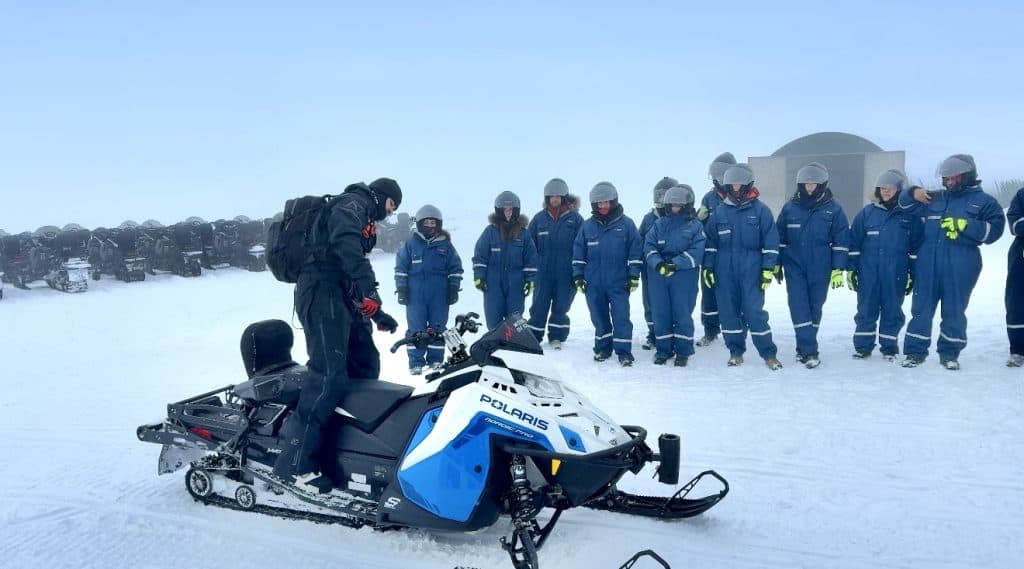
I booked this Golden Circle tour from Reykjavík, which included all three stops, plus snowmobiling on Langjökull glacier at the end of the day.
You’re picked up in the city in the morning and driven between each location, and you have an expert guide with you on the bus, giving you lots of information about each place.
Once you arrive at the location though, you’re free to wander around on your own. I really liked the balance of learning from somebody before we got there, but then being able to discover it on our own once we arrived.
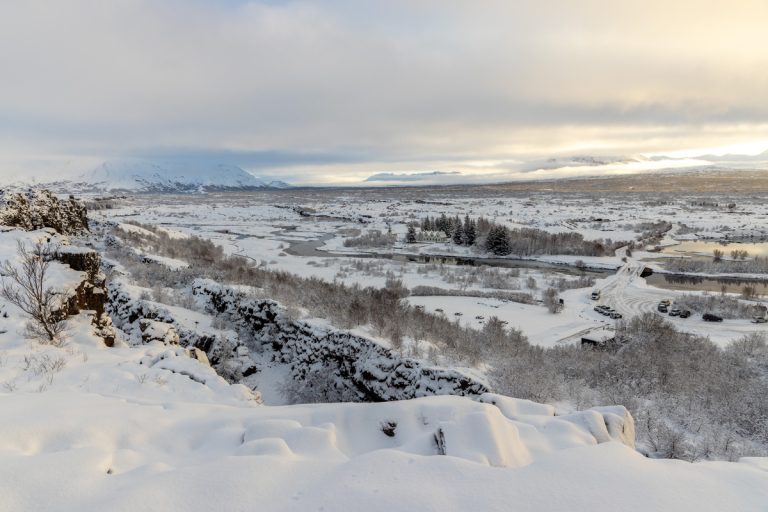
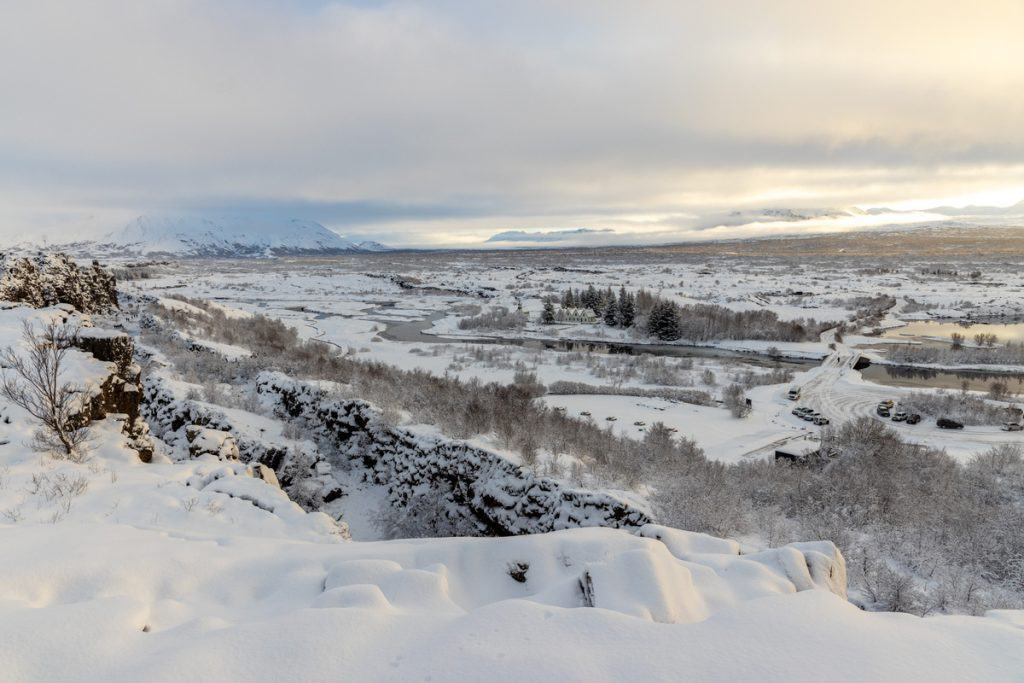
The first stop is Þingvellir National Park, a UNESCO World Heritage Site where you can walk between the North American and Eurasian tectonic plates. The views here are beautiful, especially if you’re visiting Iceland in winter and you get treated to a snowy landscape.
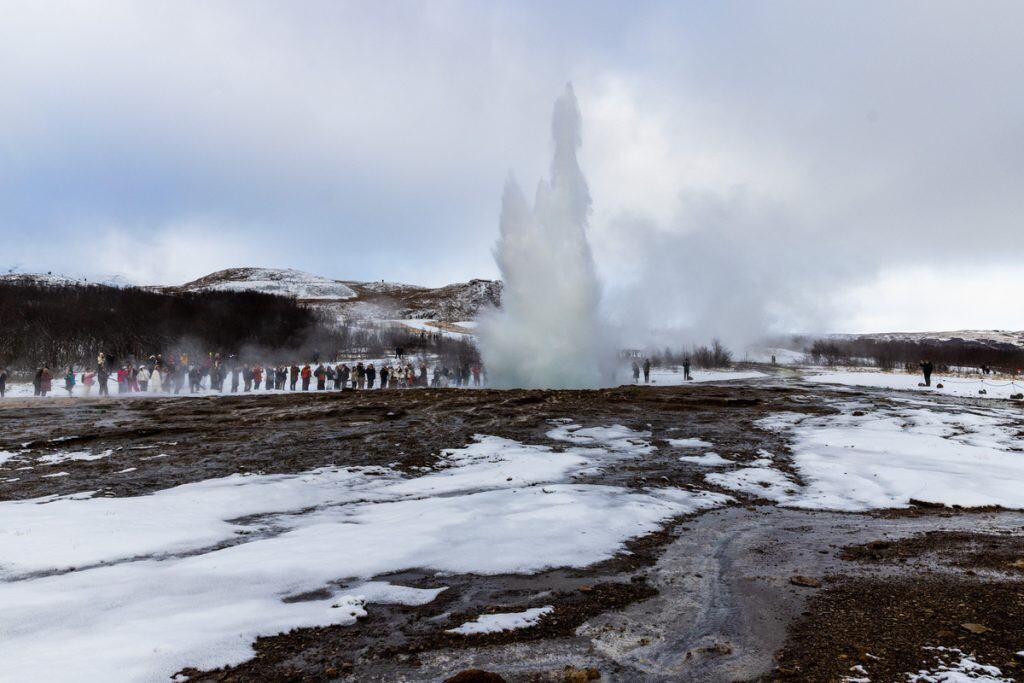
After that, you’ll head to the Geysir geothermal area, home to Strokkur, the geyser that erupts every few minutes and sends boiling water high into the air. Watching this is pretty surreal, it’s hard to believe it’s all naturally occurring.
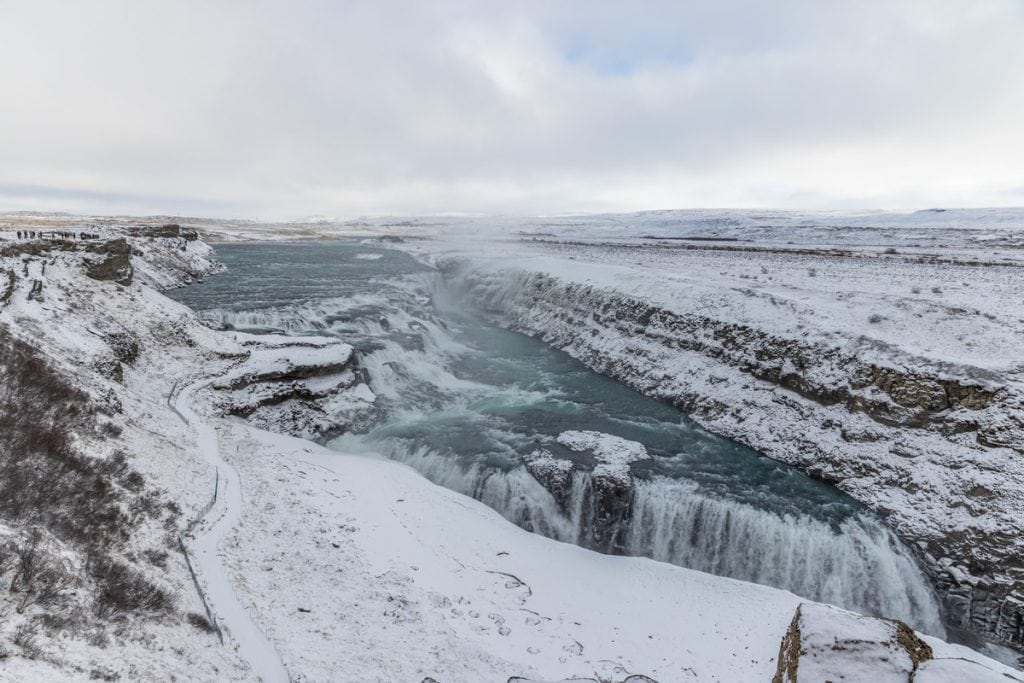
The final stop is Gullfoss, a powerful two-tiered waterfall that crashes down into the canyon below. There’s multiple viewing platforms around the waterfall that you can walk around.
You then get to end your day snowmobiling on Langjökull glacier, which is such a bucket list experience and one of my favourite things I did in Iceland. The suits and helmets are all included in your tour so you don’t need to worry about bringing anything.
2. Hvammsvik Hot Springs
Visiting a hot spring is an absolute must do in Iceland, in fact I’d recommend going to a few. Some of them are completely natural with no facilities, and that’s where you’ll get the most authentic experience. Others are entirely man-made, like Blue Lagoon and Sky Lagoon.
And then you have Hvammsvik Hot Springs that’s a perfect combination of the two. which is why I’d recommend it.
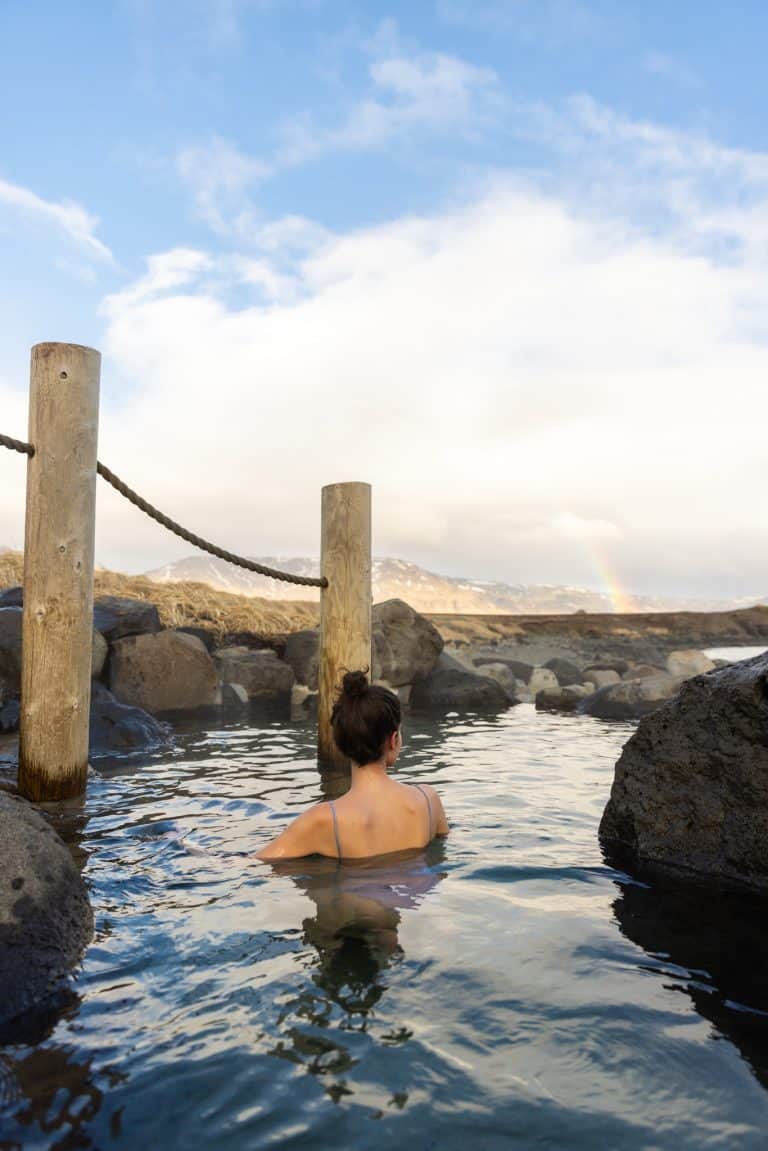
The eight hot springs here are all natural, but facilities have been built around them to make it more comfortable. Which means there’s changing rooms, a restaurant and a swim-up bar, but it’s not a full on spa like Sky Lagoon.

It’s the perfect day trip from Reykjavík as it’s only an hours drive away. You can either drive yourself (which is what we did), or you can book your ticket with transport from Reykjavík.
Hvammsvik is located on Hvalfjörður fjord, and the hot springs sit right on the shoreline, so you can use the ocean as your very own natural cold plunge.
The setting is what makes this place so special, it’s so peaceful and much less crowded than Sky Lagoon.
Read my full review of Hvammsvik Hot Springs so you know exactly what to expect before you visit.

3. South Coast
If you only have time for one day trip from Reykjavík, I’d recommend this South Coast trip. It covers some of the most dramatic landscapes in Iceland, and you get to hike on a glacier which is one of the most surreal experiences I’ve ever had.
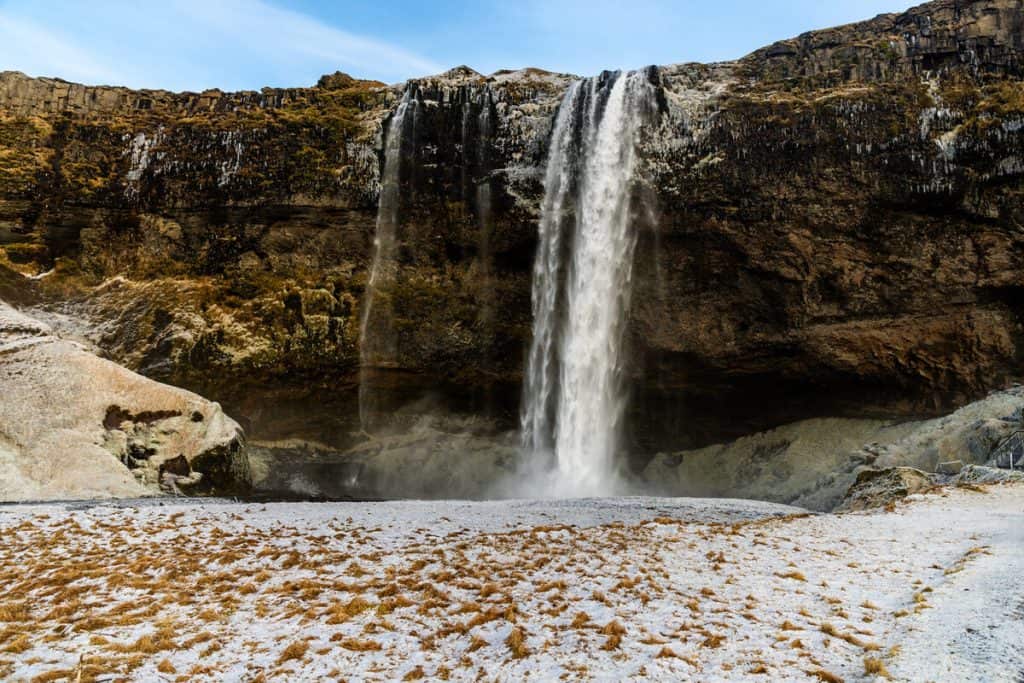
The first stop is Seljalandsfoss, one of Iceland’s most iconic waterfalls. What makes it special is the path that runs behind the waterfall, so you can actually walk around the back of it.
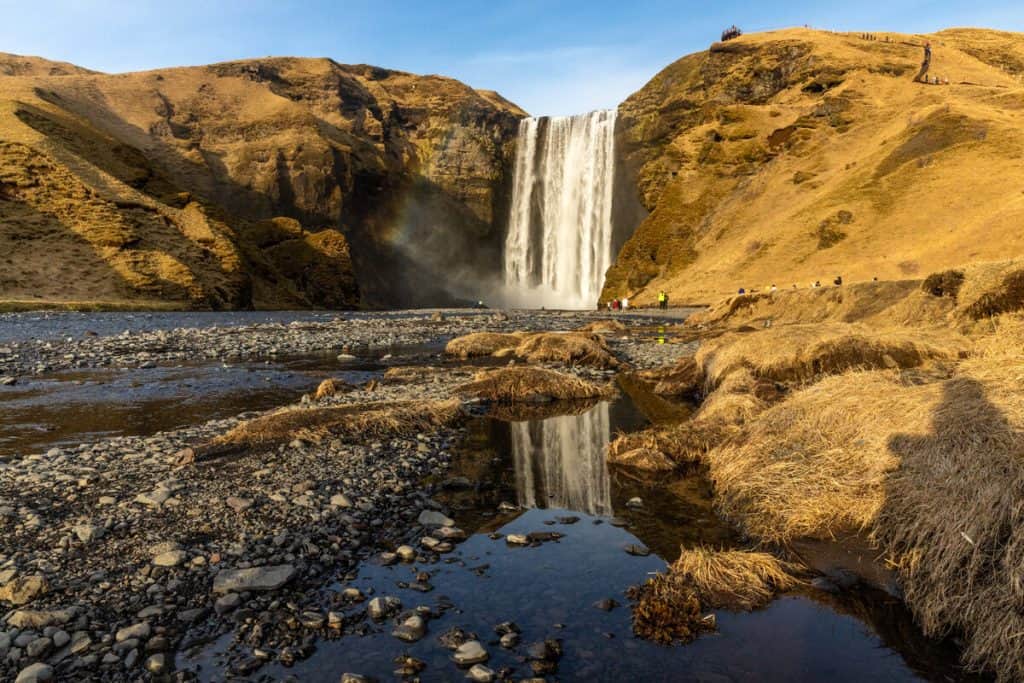
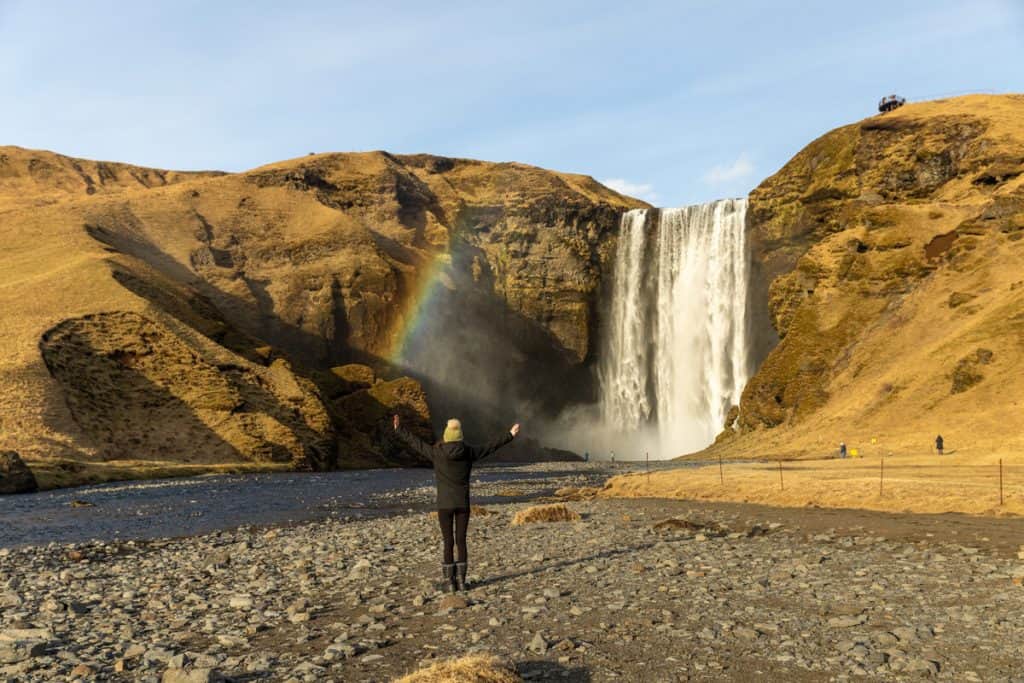
Next up is Skógafoss, a huge waterfall with a 60 metre drop that feels incredibly powerful when you’re standing at the bottom of it.
You can also climb the staircase to the viewing platform at the top. It’s over 500 steps and definitely a leg workout, but the view is worth it.
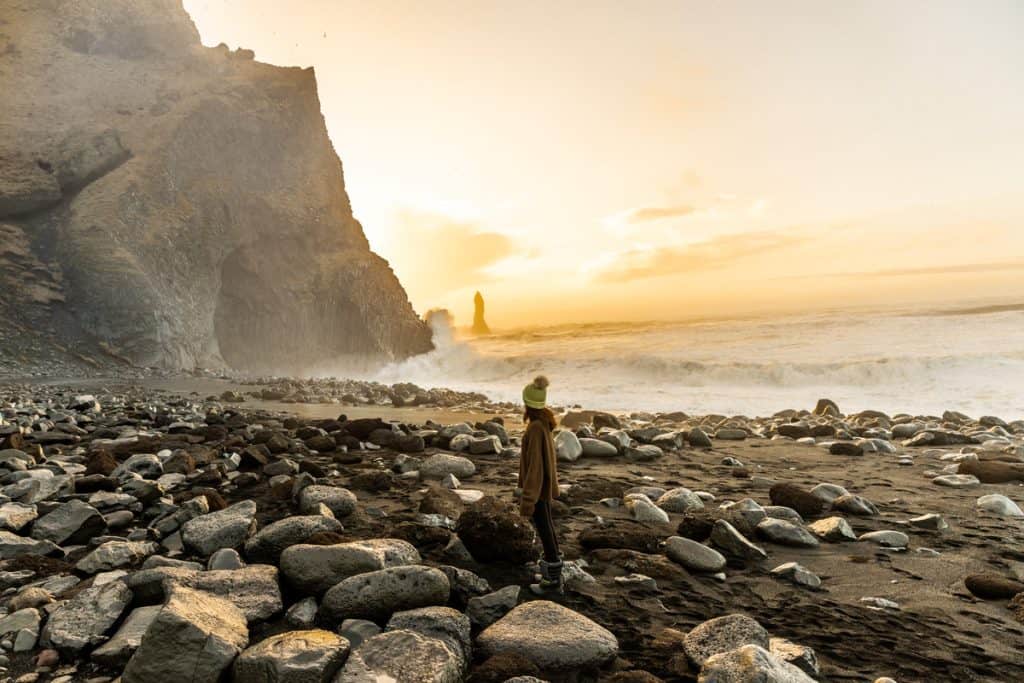
You’ll also stop at Reynisfjara, the most famous black sand beach in Iceland. The sand is pitch black, the basalt columns are huge, and the waves crash in with so much force it almost doesn’t feel real.
It’s one of the most dramatic places I’ve seen, but you do need to be careful. The waves are powerful and unpredictable, so keep your distance and check the warning lights at the entrance before you go down.
The highlight of this day trip for me was the glacier hike on Sólheimajökull.
You’re surrounded by ice, deep crevasses and unreal scenery, and it genuinely feels like you’re on another planet.
All the equipment is provided and you’re guided the whole time, so it’s very manageable even if you’ve never done anything like it before.

4. Jökulsárlón glacier lagoon
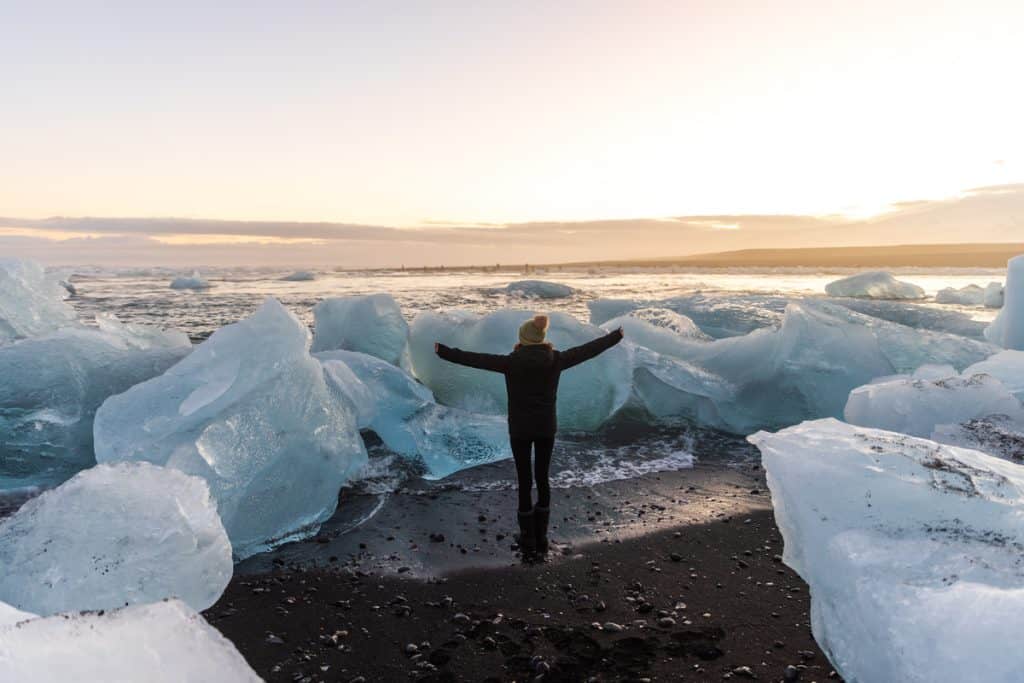
Jökulsárlón Glacier Lagoon is one of the most amazing places I visited in Iceland. It’s formed by water melting from Breiðamerkurjökull glacier, and it’s filled with huge icebergs that slowly drift out towards the Atlantic Ocean.
It is quite far from Reykjavík, around five hours each way, so it is a long day, but still doable with this day trip.
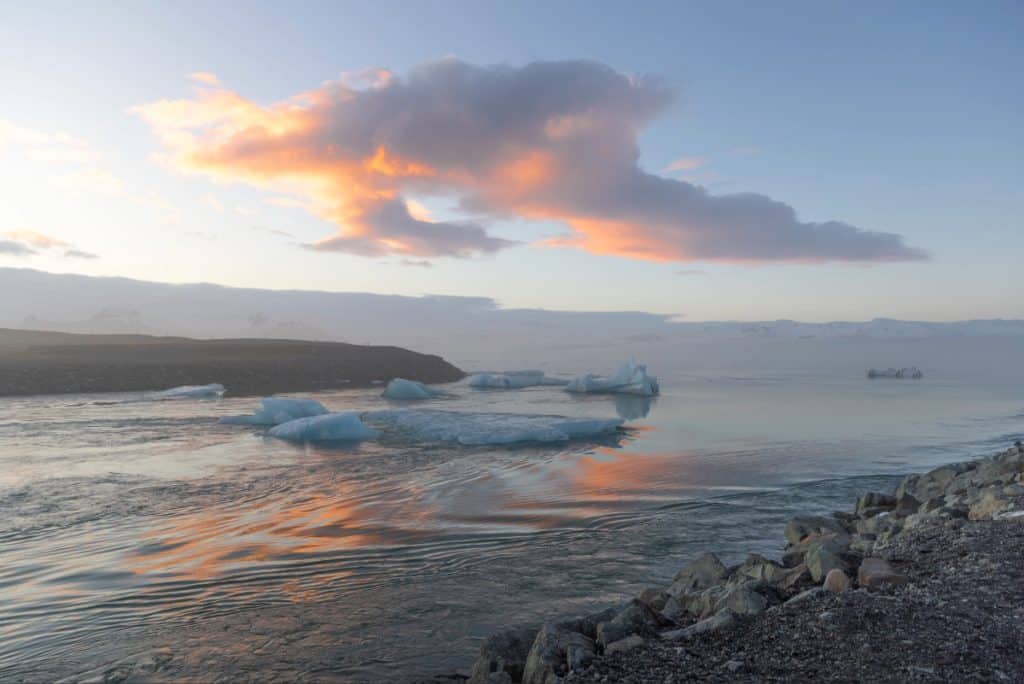
As well as Jökulsárlón, you’ll get to visit Diamond Beach, a black sand beach that gets covered in all of the ice from Jökulsárlón. It’s absolutely beautiful and the perfect place for photos.
Should you book tours or drive yourself?
During my week in Iceland, I hired a car for the entire trip. I spent the first four nights of my trip in Reykjavík, where I mostly booked day trips. For the rest of the time, I drove myself. And there’s pros and cons to both, which I’ve listed below:
Pros of day trips:
- You don’t need to drive if there’s bad weather
- You’ll learn about each place from an expert guide
- Everything is organised for you so it’s stress-free
Pros of driving yourself:
- Arrive at each place before the crowds
- Cheaper than day trips
- Flexibility to stop off wherever you want
Driving in bad weather
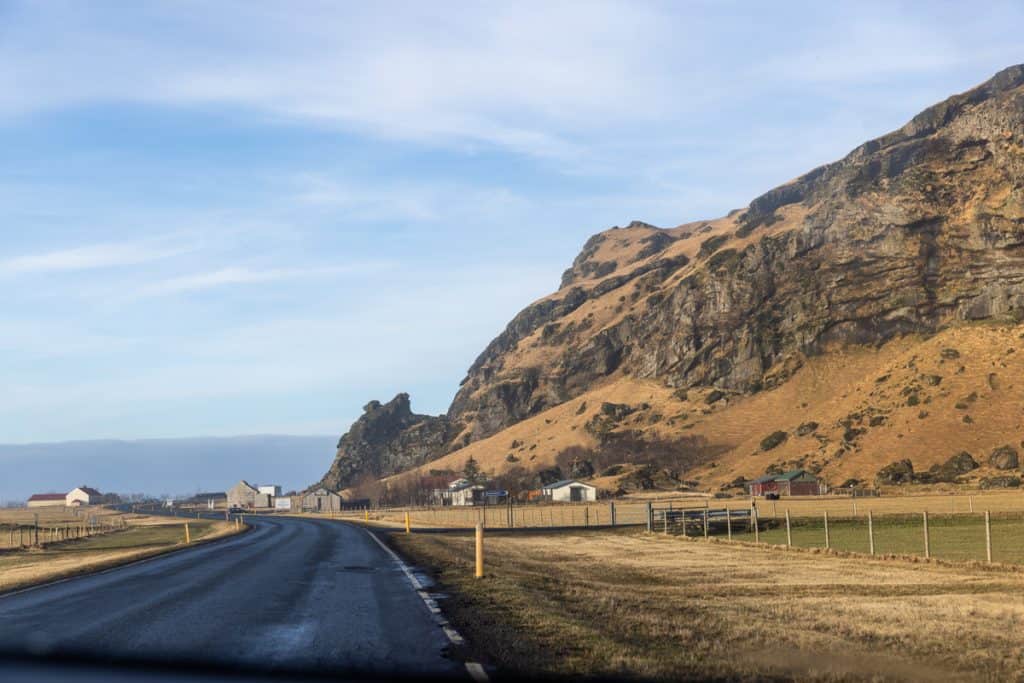
If you’re visiting Iceland during winter, the major benefit of booking a day trip is that you won’t need to drive if the weather is bad.
I visited Iceland in February and we were mostly very lucky with the weather, but there was one day where we had a pretty bad snowstorm.
Luckily, that was a day we were on a day trip, so our driver, who was very used to Iceland’s ever-changing weather, navigated it with ease. I’d have been pretty stressed if it was me behind the wheel!
I’ve written a more in-depth guide to renting a car in Iceland, where I compare day trips vs driving yourself.
Avoiding crowds
A big downside of day trips though, is that the coaches generally arrive at each place around a similar time. So there’s no chance of escaping the crowds. If you’re driving yourself, you can set off early and avoid the mad rush.
Cost
Day trips are pretty expensive, and it’s cheaper to drive yourself. But you usually get a bucket list experience included in the trip, like snowmobiling or a glacier hike.
Those activities alone cost a lot of money, and you aren’t actually paying much more to visit all the other sights, have a guide, and get your transport sorted for you.
For example, prices for a glacier hike start from around £120, and the South Coast day trip WITH a glacier hike, is around £140. So you get to see three more sights for an extra £20.
Getting to do all of these once in a lifetime experiences is what made Iceland so special for me, but if you’re not too fussed about them, then of course you could just drive yourself, skip the big experiences, and save the money.
Read my other Iceland guides:
16 Best Things to Do in Iceland
The Ultimate Iceland Winter Packing List
Renting a Car in Iceland in Winter
9 Best Things to do in Reykjavík