7 Day Iceland Itinerary for First Time Visitors

My holiday to Iceland was one of the most incredible trips I’ve done. It was such a bucket list destination for me that I was worried it wouldn’t live up to my expectations.
But luckily, it exceeded every one of them.
My boyfriend and I spent a week exploring Iceland and we got to do the most incredible things- like walking on glaciers, exploring ice caves, snowmobiling, and of course, seeing the northern lights.
We focused only on Iceland’s south coast as we didn’t want to feel rushed and found seven days to be the perfect amount of time.
7 Day Iceland itinerary overview
Day 1: Arrive and explore Reykjavík
Day 2: Golden Circle and Glacier Snowmobiling
Day 3: Waterfalls, Reynisfjara beach and a glacier hike
Day 4: Hvammsvik Hot Springs
Day 5: Road trip to Jökulsárlón
Day 6: Ice caves, Jökulsárlón and Diamond Beach
Day 7: Road trip back to Reykjavík
Do I need a car for this itinerary?
No, you don’t need a car for this itinerary. Every place in this guide is reachable from Reykjavík on a day trip where the coach will pick you up and drop you back near your hotel.
Even Jökulsárlón glacier lagoon, which is five hours from Reykjavík, can be done on a day trip, it’ll just be a very long day.
That being said, I would recommend hiring a car as you’ll have a lot more flexibility in your schedule, and you’ll be able to stop off at viewpoints you won’t get to see on the day trips.
I’ve written this itinerary exactly as I did it, so there’s a mixture of day trips and self-driving days, but we hired the car for the duration of the trip. Parking in Reykjavík is really easy, and all done through the EasyPark app.
I booked my hire car through Discover Cars. They compare the cost across loads of different providers to find the best price for your trip, have flexible cancellation policies, and they’ve won awards for their customer service.
I’ve written a guide on my experience renting a car in Iceland, where I compare day trips vs driving yourself.
When to visit Iceland
The best time of year to visit Iceland depends on what you want to do. Winter is the best time to see the northern lights, which is a huge draw for a lot of people.
The weather is unpredictable at this time of year though, so roads are often closed, and driving feels riskier. But there is something magical about seeing Iceland in the snow.
In the summer, Iceland has “midnight sun” from May to early August when the sun never sets, which means you have more hours in the day to explore. You can still hike on glaciers in the summer, and you can visit some ice caves, but you can’t see the northern lights.
Day 1: Arrival into Reykjavík
Iceland has one international airport – Keflavík International Airport, which is a forty-five minute drive from Reykjavík, the capital city.
Although it’s very tempting to leave Reykjavík straight away and head for Iceland’s beautiful nature, I’d recommend setting aside one day of your itinerary to explore it.
I spent four nights of my trip with Reykjavík as my base and I was surprised by how much there is to do there. There’s loads of museums, art galleries, interesting landmarks and a great food scene.
You can do whale watching tours in the day, northern lights tours in the evening, and there’s incredible hot springs within easy reach of the city.

Things to do in Reykjavík
Reykjavík is a small and very walkable city, so you can easily see the main sights in one day.
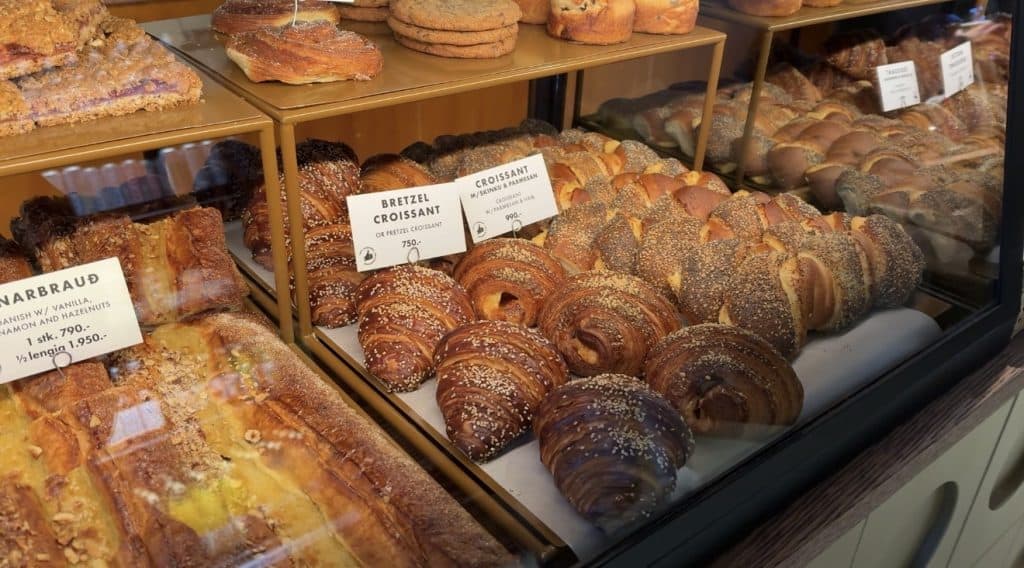
Start your day with breakfast at Brauð & Co, an artisan bakery with delicious cinnamon rolls, pastries and sourdough bread. There’s five across Reykjavík so you’ll probably be near one.
Afterwards, book this walking tour. It lasts two and a half hours and your expert guide will take you to all the main sights in the city and tell you the history of each of them. It’s a great way to start your day and get your bearings.
There’s two timeslots – 10:00am and 14:00pm, so you can choose the time that suits you.
Make sure you book your walking tour in advance to avoid missing out.
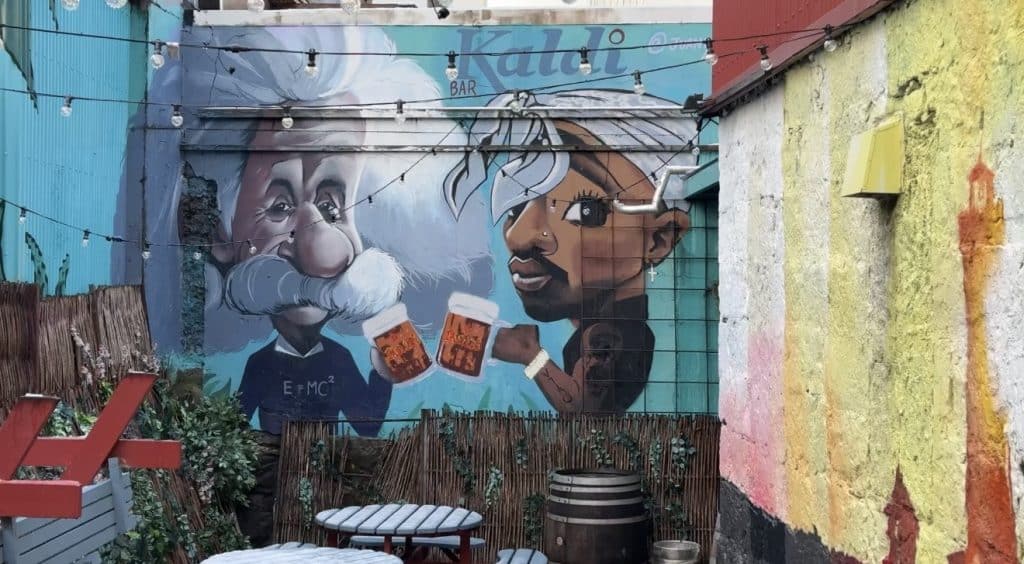
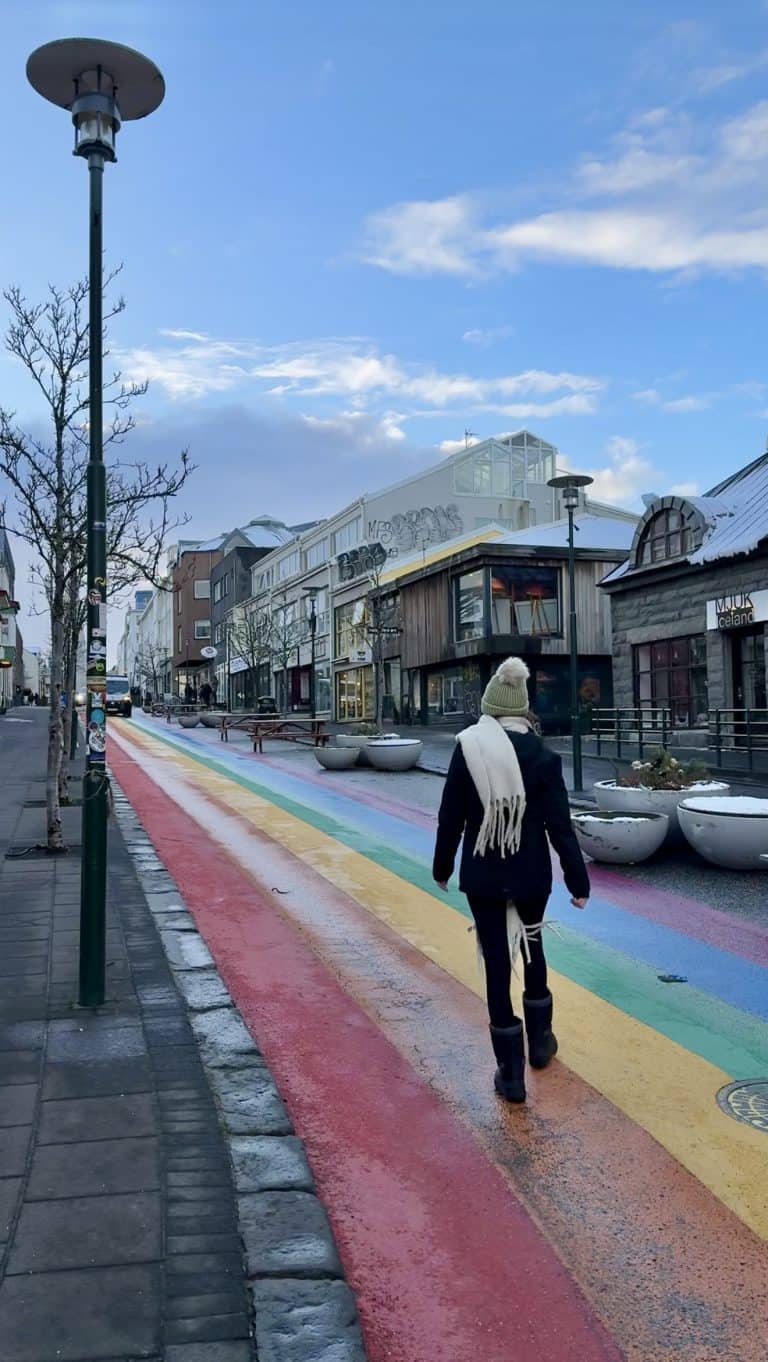
Then head to the top of Hallgrímskirkja church, where you’ll get panoramic views over the city, before walking down Rainbow Street and browsing the shops, cafes and restaurants.


Make your way to the waterfront to see the Sun Voyager statue, designed by Icelandic artist Jón Gunnar Árnason as a symbol of light, hope, and discovery.

Continue along the water to the Harpa Concert Hall, the home of the Icelandic Symphony Orchestra and the Icelandic Opera.
They have a regular events schedule so it’s worth seeing what’s on whilst you’re there if you have time for a show.

In the afternoon, visit one of Reykjavík’s many museums.
I went to the Whales of Iceland museum which has life sized models of the whales that live in Iceland’s waters. But there’s lots to choose from depending on what you’re interested in.

One of the best parts about being in Reykjavík is that you’re close to two of Iceland’s most famous hot springs – Sky Lagoon and the Blue Lagoon.
Sky Lagoon is much closer to the city, and this is the one I visited. It’s based around a seven-step ritual so there’s different rooms to explore, but my favourite part was the huge infinity pool lagoon.
It has a swim-up bar and amazing views over the Atlantic Ocean, so head there late afternoon to catch the sunset.
Sky Lagoon is one of the most popular activities in Reykjavík, so get your tickets before your trip.

For more information about Reykjavík, read my one day itinerary and my guide to the best things to do in the city
Best restaurants in Reykjavík
I had some really good meals in Reykjavík and I’ve popped my favourites below:
- Skál – A fancier spot great for date night, with a tasting menu option
- DEIG – Bakery serving New York style bagels
- Le Kock – Casual burger restaurant – the chicken burger is so good!
- Brauð & Co – Popular bakery with amazing cinnamon rolls
- La Poblana – Tacos and cocktails in the centre of Reykjavík

Where to stay in Reykjavík
There’s great hotel options in Reykjavík. It is an expensive city but there’s hostels if you’re on a budget.
I stayed in two different hotels in the city, which were quite different in what they offer.
The first is Local 101. It’s a boutique hotel run by husband and wife David and Alma and it has a really cosy, personal feel.
The lobby is also home to the hotel’s bar and restaurant, and it feels as though you’re walking into someone’s family home. Our room was small but beautifully finished, and you’re just a short walk from the centre of town.

The second hotel I stayed in is Grandi by Center Hotels. This is a much bigger hotel, with a large restaurant, bar, and even a spa. The room was much larger too but it was very dark which I didn’t love. Again, it was only a short walk to the centre of town.
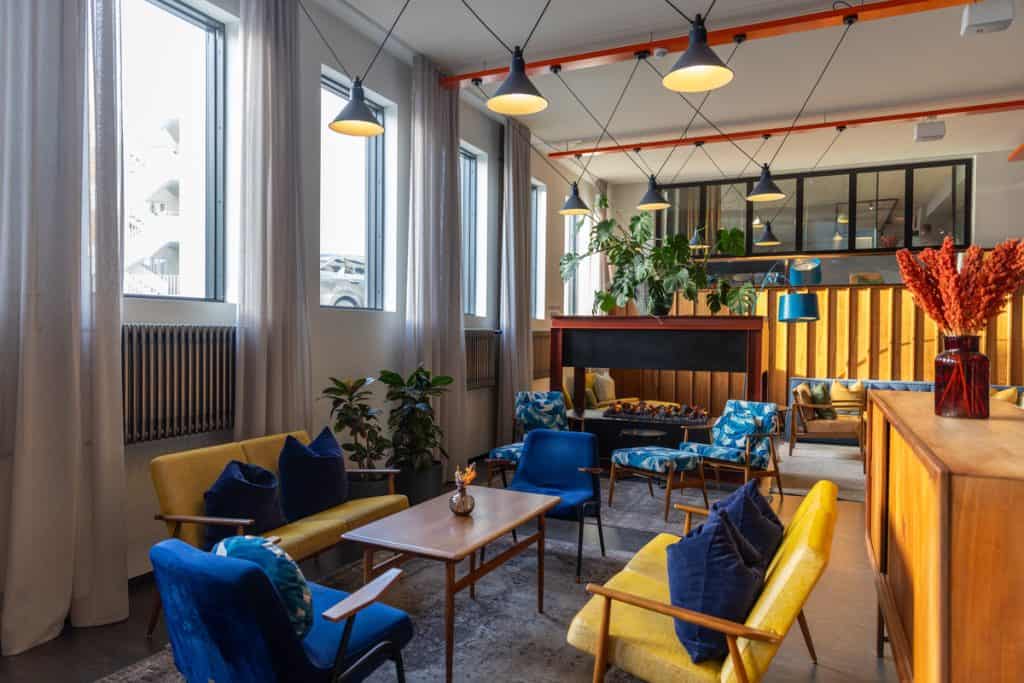
Both hotels are great options, it really just depends what style you prefer.
Day 2: Golden Circle and Glacier Snowmobiling
Today you’re heading to see three of Iceland’s most popular landmarks – Þingvellir National Park, the Geysir’s and Gullfoss waterfall.
Together they form the Golden Circle, a short, circular route that makes it a perfect day trip from Reykjavík.
You have two options for this trip – drive yourself, or take a day trip, where you’ll be picked up and dropped back in Reykjavík on a coach.
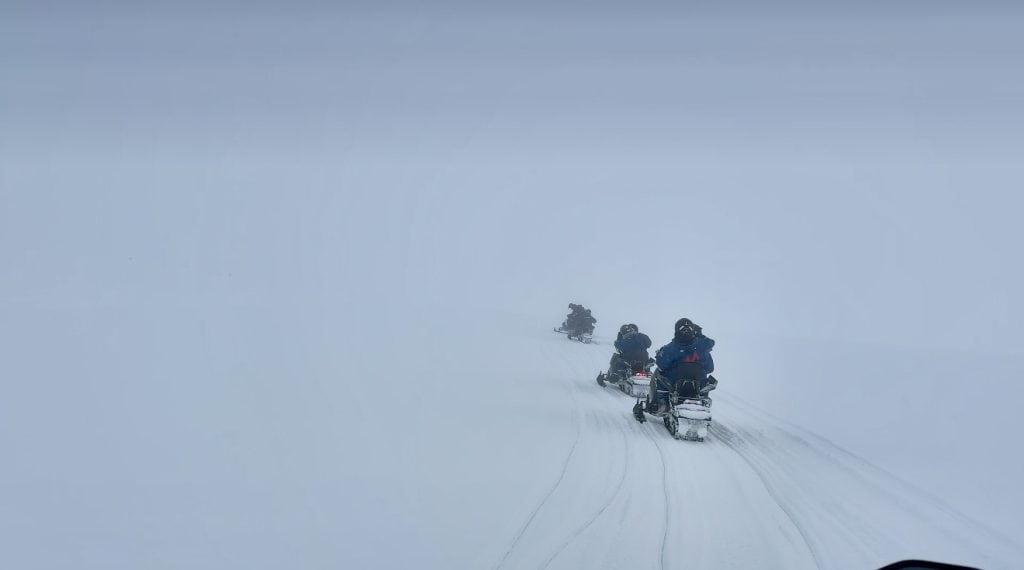
I booked this day trip and it was brilliant. You visit all three sights, and finish the day with snowmobiling on Langjökull glacier.
There was a snowstorm when we went so there was no visibility on the glacier but it was still such a fun activity and one of my most treasured memories from the trip.
How many people get to say they’ve driven a snowmobile on a glacier? That’s pretty cool.
The benefits of taking a day trip is that you don’t have to drive yourself, which is great if you’re visiting in winter when the weather can be unpredictable.
You’ll also have an expert guide telling you about each location, and there’s lots to know!
The drawback is that the coaches typically all arrive at the same time, so it will be more crowded. If you’re driving yourself, you can get there early and skip the crowds.
Þingvellir National Park
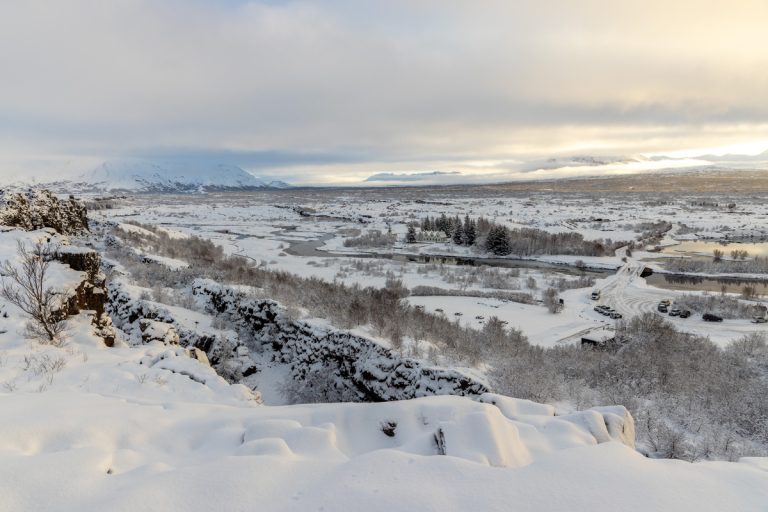
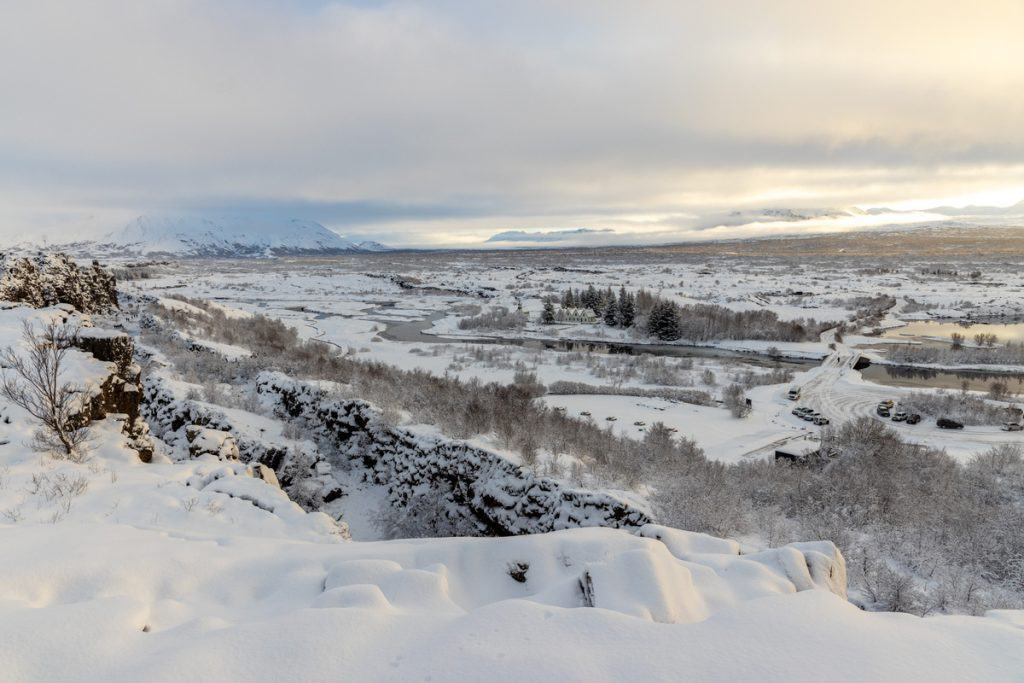
Your first stop on the Golden Circle is Þingvellir National Park, a UNESCO World Heritage Site where the landscapes feel otherworldly.
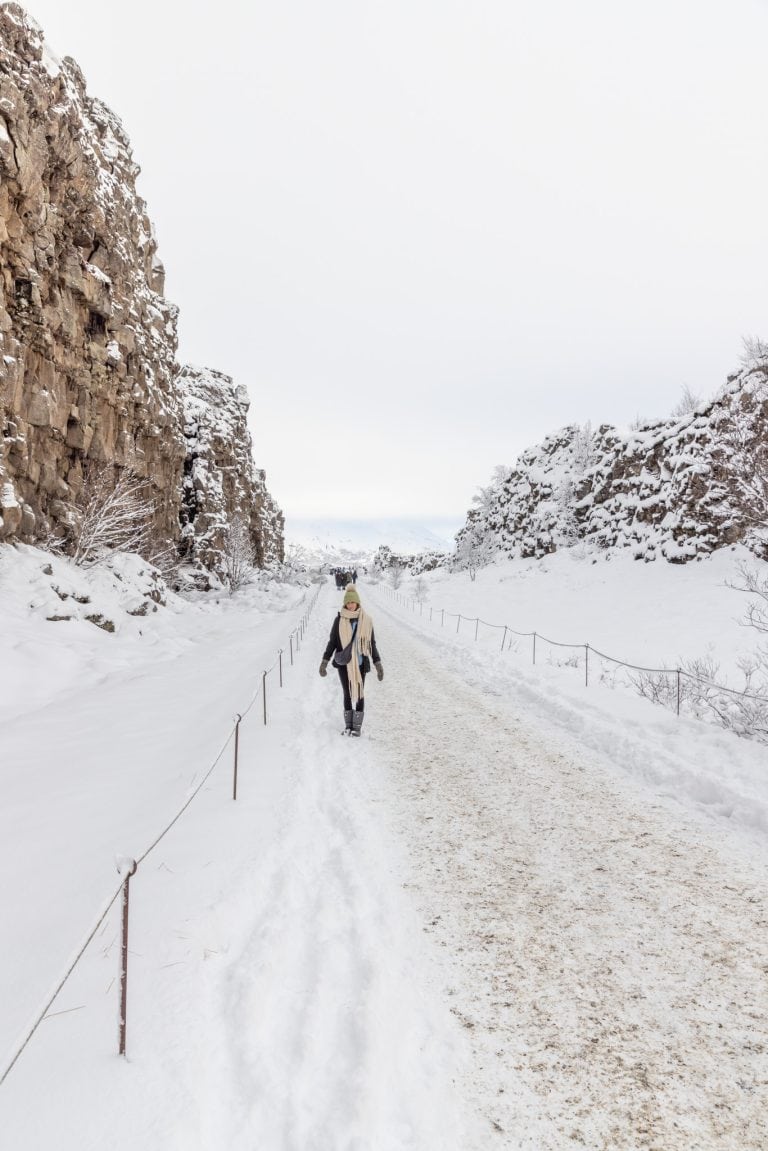
What makes Þingvellir so special is that it’s located between two tectonic plates. The North American and Eurasian plates are slowly moving away from each other, and you can walk through the middle of them.
Geysir Geothermal Area
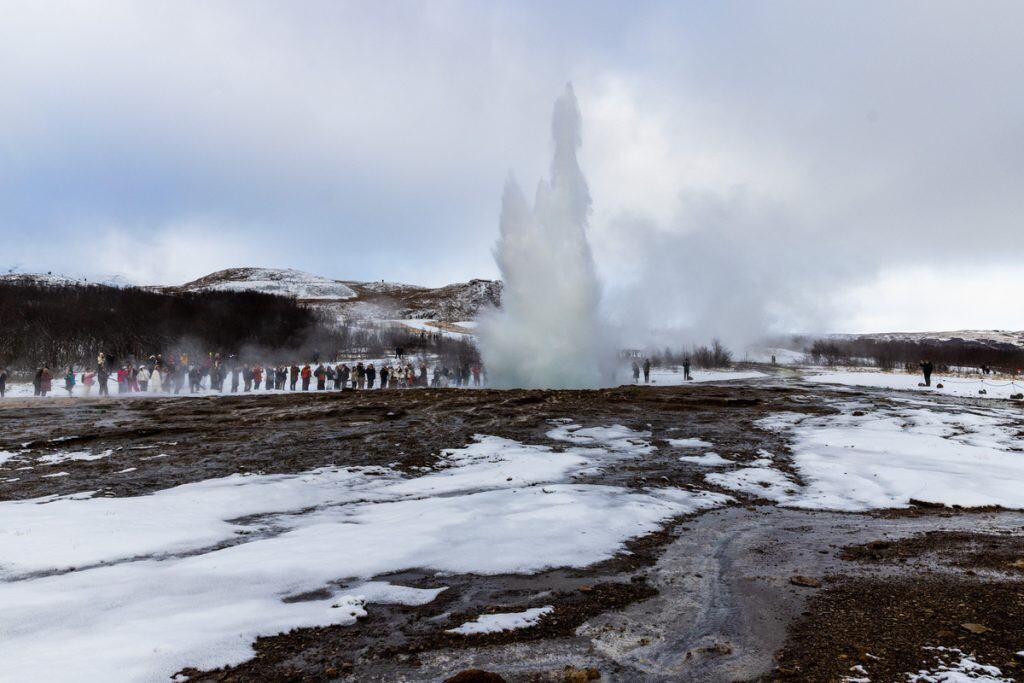
Next, you’ll head to the Geysir Geothermal Area, one of the most active geothermal areas in Iceland.
The main attraction here is Strokkur, a huge geyser that erupts every 5-10 minutes, shooting boiling water up to 40 metres in the air.
A lot of the things you see in Iceland are mind blowing, but the geysers are crazy. It’s hard to get your head around that what you’re witnessing is naturally occurring.
Gullfoss Waterfall
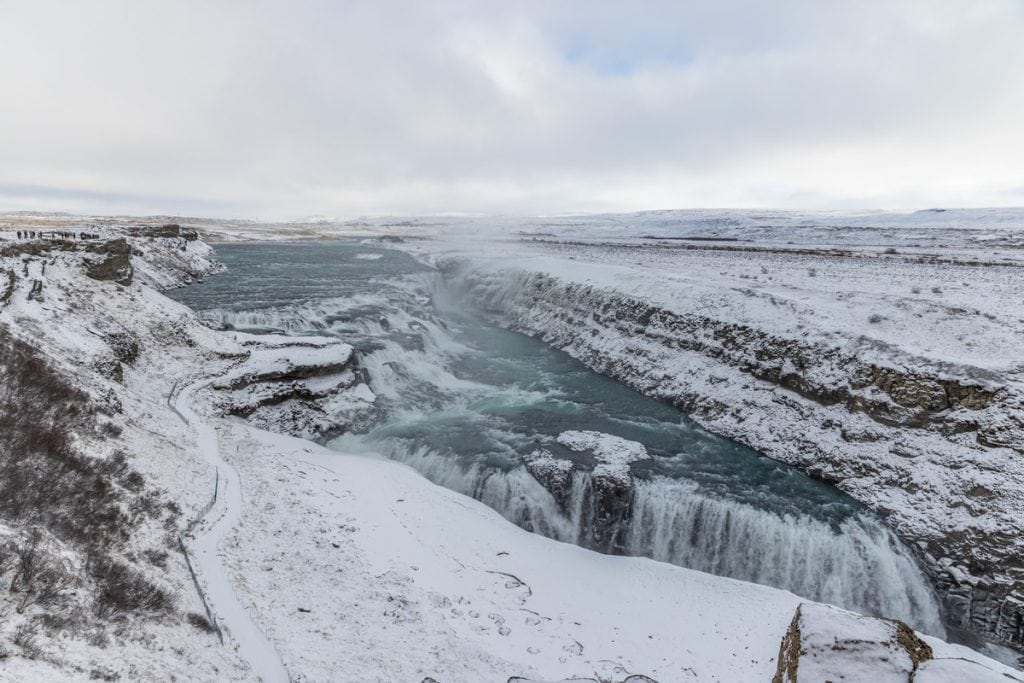
Your final stop on the Golden Circle is Gullfoss, one of Iceland’s most famous waterfalls.
It’s huge, with two tiers flowing down into the canyon of the Hvita River. We were lucky enough to witness it with snow all around it, but this place would be amazing at any time of year.
There’s several viewing platforms here, so you can walk around and see the waterfall from lots of different angles.
Where to stay
You’ll be back in Reykjavík in the evening so you can stay in the same hotel for the night.
Day 3: Waterfalls, Reynisfjara beach and a glacier hike
It’s time for a jam packed day trip to see two incredible waterfalls along Iceland’s south coast, visiting Reynisfjara beach and hiking on a glacier!
I booked this tour which starts and ends in Reykjavík, but you could also drive yourself.
Seljalandsfoss
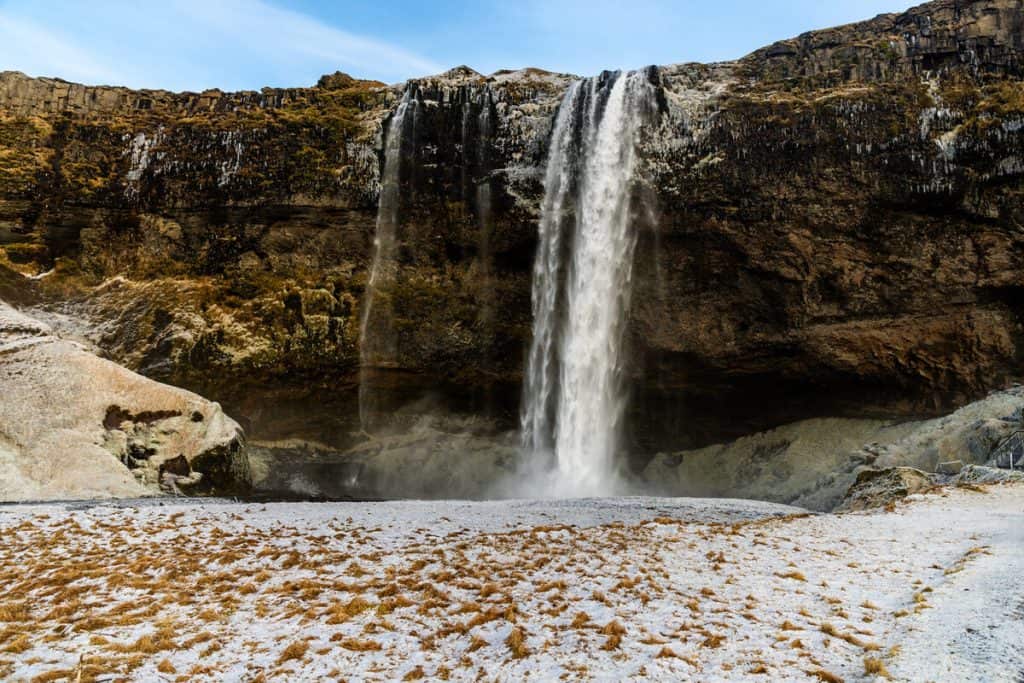
The first stop is Seljalandsfoss, one of Iceland’s most famous waterfalls. You’ll have probably seen pictures of it when searching for Iceland online.
One of the coolest things about Seljalandsfoss is that it has a path that runs around the back of the waterfall so you can actually walk behind it.
Whilst you’re there, make sure you follow the path along to Gljúfrabúi, which is a bit of a secret waterfall. Its hidden inside a gorge and you can get up close to it, so wear good waterproofs!
Skogafoss
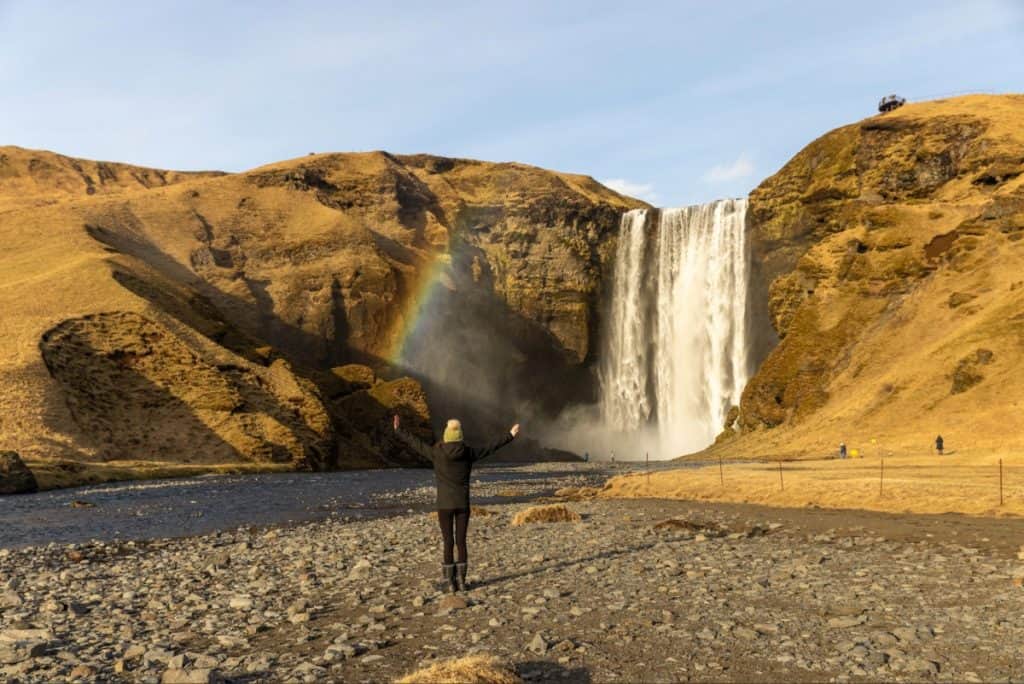
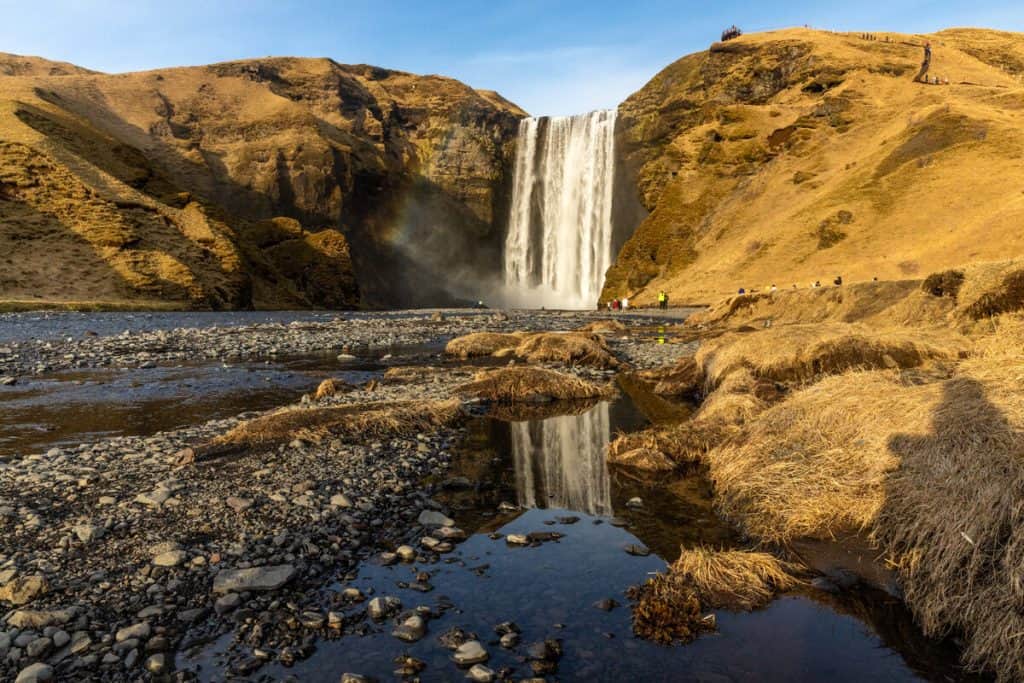
Next, you’ll stop at Skógafoss, a huge, powerful waterfall that drops straight down from the cliffs above. If the sun’s out, you’ll often see rainbows forming in the spray (we saw one which was amazing).
You can also climb some steps to a viewing platform with views over the top of the waterfall. There’s over 500 steps so it’s a pretty tiring climb, but well worth it!
Glacier hike
After the waterfalls, you’ll get to do a glacier hike, which was my favourite part of the tour, and probably my whole trip.
The glacier you’ll hike on is called Sólheimajökull, one of the easiest to reach in Iceland. Your expert tour guide will take you out onto the glacier, where you get to explore its crevasses.
There aren’t words for how small you feel when you’re stood in the middle of a vast glacier, it’s really special to witness nature in that way.

Reynisfjara beach
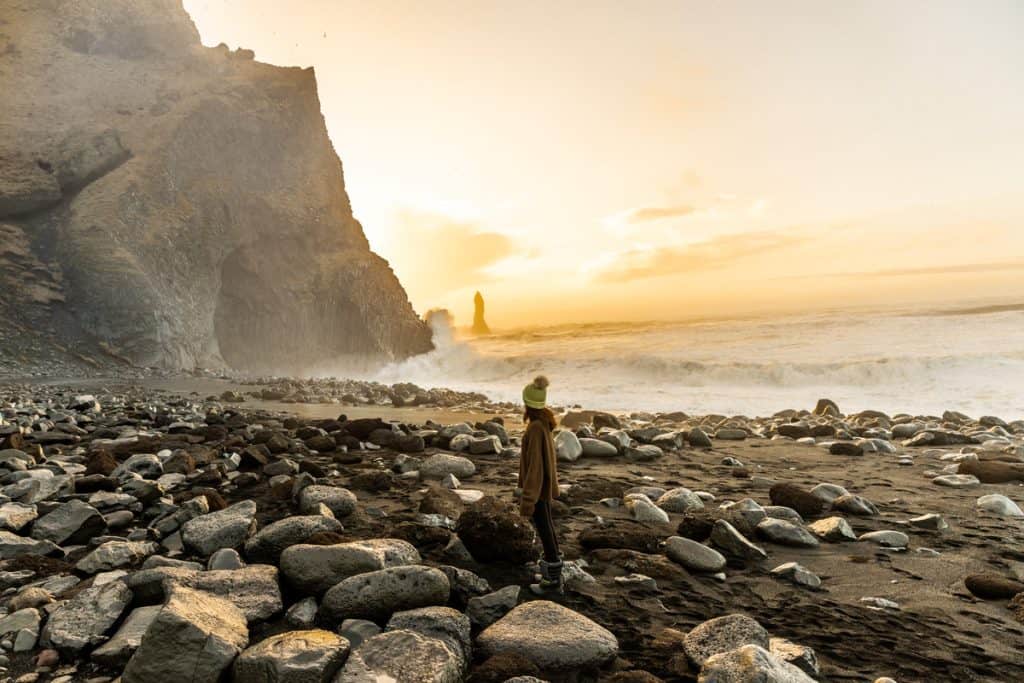
The tour also includes a stop at Reynisfjara, Iceland’s famous black sand beach, known for its basalt columns and powerful waves. It’s one of those places that really shows how dramatic Iceland’s landscapes are.
Where to stay
Stay in Reykjavík again.
Day 4: Hvammsvik Hot Springs
Hot springs are a key part of Icelandic culture. They’re where locals go to bathe, socialise and relax. So you absolutely have to experience a few whilst you’re there.
So on your fourth day, head to Hvammsvik Hot Springs, which is a one hour drive from Reykjavík.

Unlike Blue Lagoon and Sky Lagoon which are entirely man-made pools, Hvammsvik consists of eight natural hot springs.
The hot springs naturally occur there, and they’ve just built facilities around them to make it more comfortable.
It’s a great way to have a more authentic hot spring experience if you don’t have time to search for the completely natural ones.

I absolutely loved my day at Hvammsvik, it was one of my favourite experiences in Iceland. It’s located on the shore of a remote fjord, and it’s so peaceful.
The hot springs range from 35°C to 40°C, and it’s next to the ocean, so you can jump in if you’re feeling brave and fancy a cold plunge (I wasn’t).

I’d recommend spending the whole day here as there’s lots to keep you entertained. There’s a swim-up bar in one of the hot springs, a steam bath and a restaurant.
But the main reason to stay all day is that you get to see the landscape change, watch the sunset, and even catch the northern lights!
We drove ourselves to Hvammsvik, but there is an option to book the tour with transport included.

Where to stay
You can stay at Hvammsvik in one of their luxury lodges, or head back to Reykjavík, which is what we did.
Day 5: Road trip to Jökulsárlón
Wake up early this morning because you’re heading to Jökulsárlón glacier lagoon, in the southern part of Vatnajökull National Park.
Jökulsárlón is still on Iceland’s south coast, but it’s a five hour drive from Reykjavík. Luckily the views along the way are incredible so the time passes quickly, and the whole route is along Route 1 (the ring road), so it’s very easy.
Keep an eye out for the wild Icelandic horses as you drive, they’re so beautiful and really friendly.

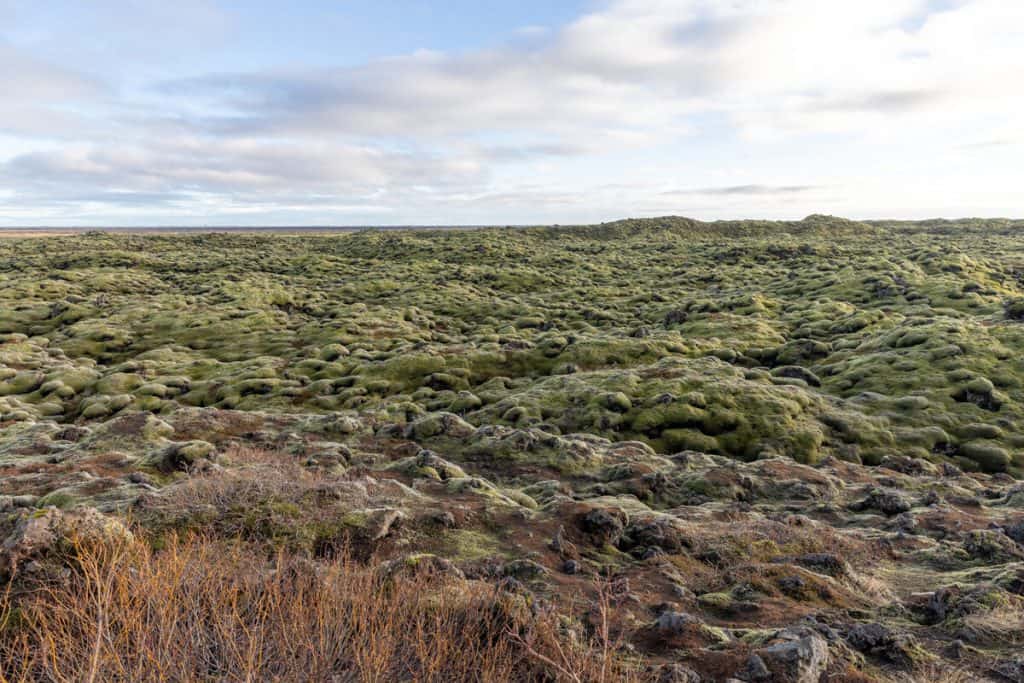
I’d also suggest stopping at the Eldhraun lava field, which was created by the Laki volcanic eruption and is one of the largest lava flows ever recorded.
Where to stay:
Stay nearby to Jökulsárlón as it’s a good place to catch the northern lights.
We stayed at Hali Country Hotel which was brilliant. The rooms were huge and really comfortable, and there was a restaurant on site.
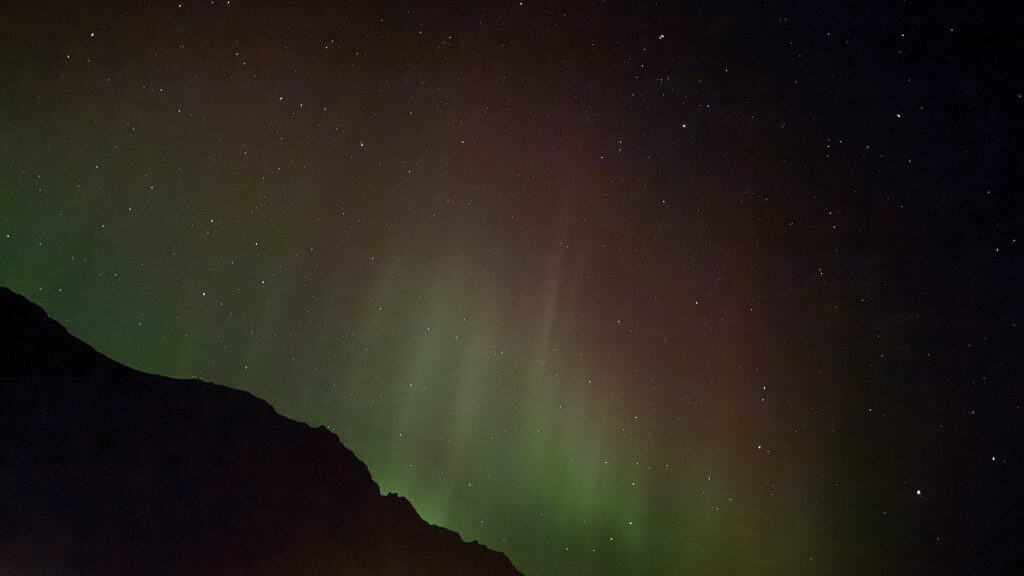
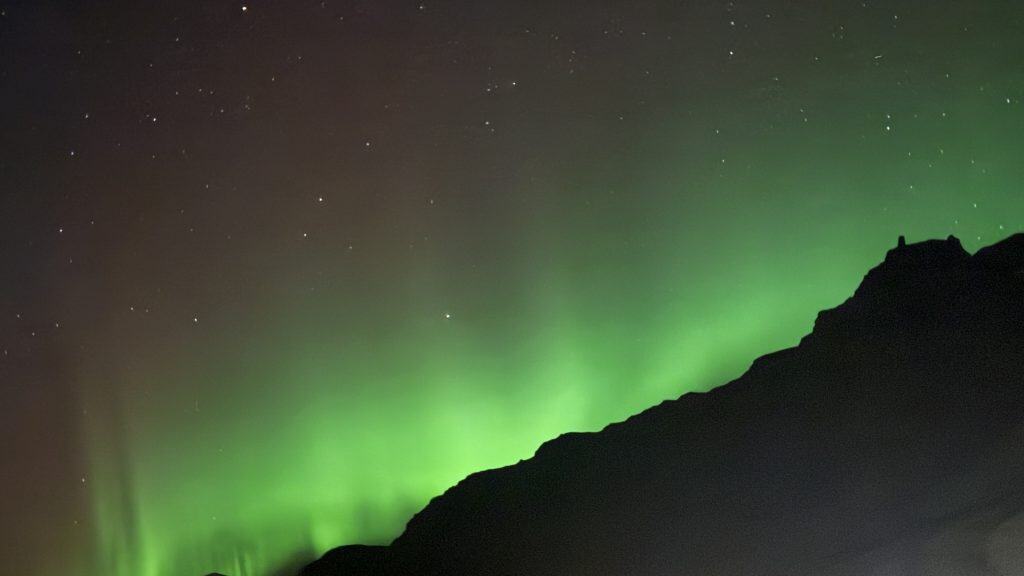
Our plan was to head to Jökulsárlón as it got dark to watch the northern lights over the lake, but I was really unwell that night so we decided to just head outside and watch them from the hotel, which was amazing to witness.
Day 6: Ice caves, Jökulsárlón and Diamond Beach
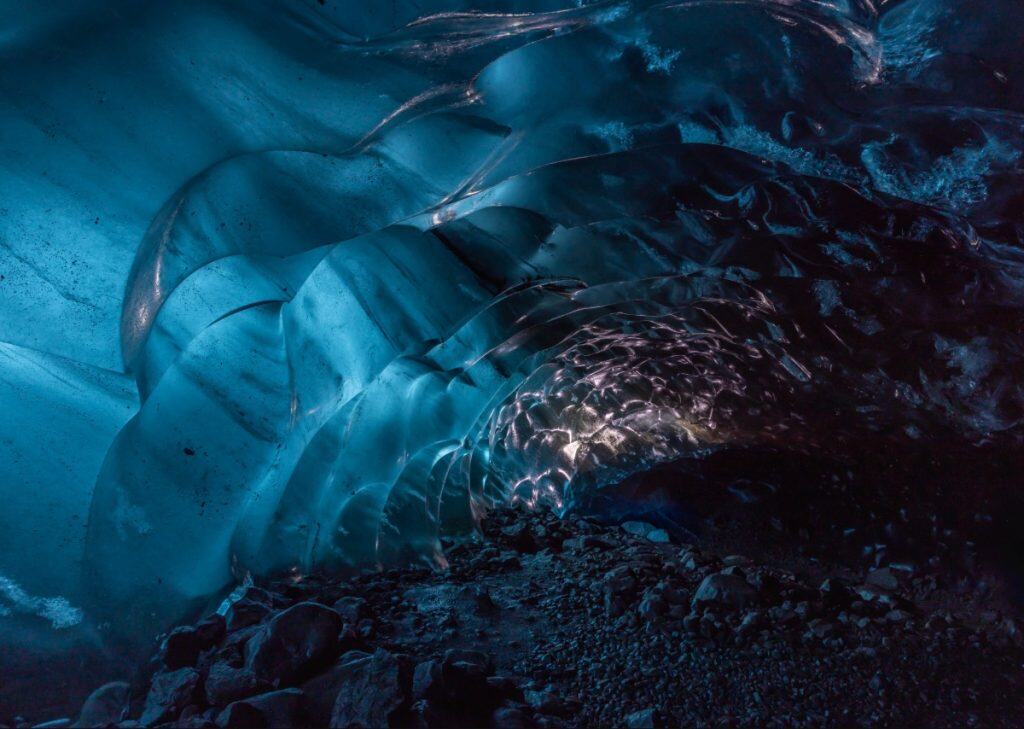
One thing you have to do whilst you’re in Iceland is to go inside an ice cave. They’re naturally formed underneath glaciers when water flows through the ice, and you actually get to walk inside them.
It’s such a magical experience, it’s hard to believe it’s even possible to do it, but it is, and it’s amazing.
I booked this tour. Our guide drove us to the cave, and the views along the way only added to the adventure. Then we put on our crampons (provided on the tour), and headed inside the cave.
This ice cave tour is one of the best things I did in Iceland. Make sure you book in advance so you don’t miss out.
You’ll walk across a glacier to reach the caves, which is amazing in itself, and then you’ll have the chance to explore multiple caves.
The whole tour lasts around three and a half hours and it’s worth every penny. This is a real bucket list experience that you’ll remember forever.
The ice cave tour starts and ends at the car park for Jökulsárlón, so once you arrive back, it’s the perfect chance to explore it.
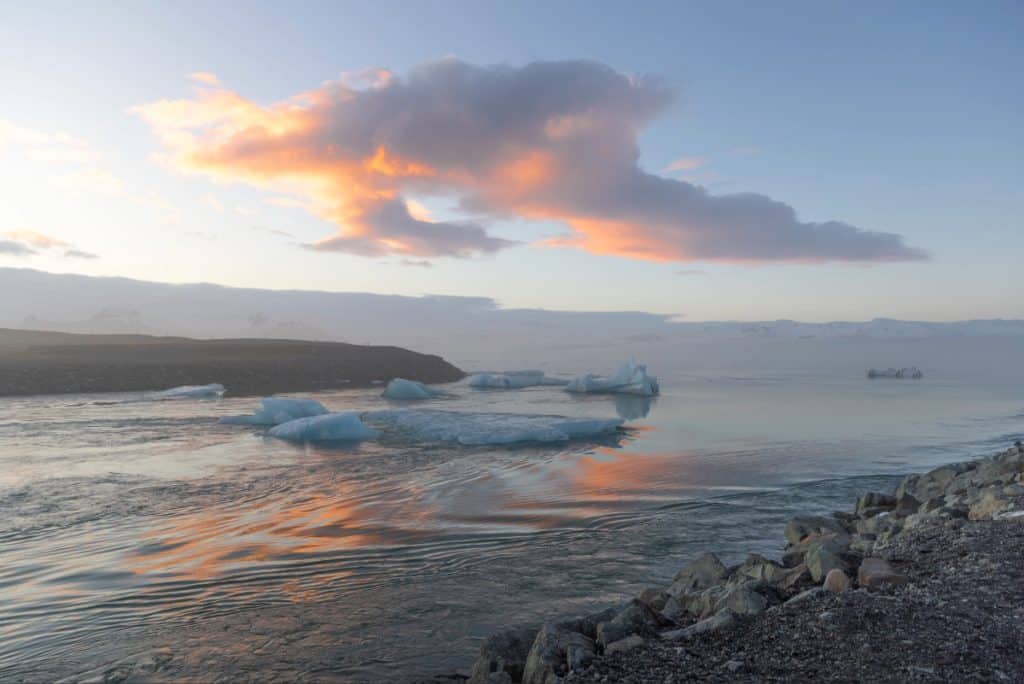
Jökulsárlón is a glacier lagoon formed by the melting ice of the Breidamerkurjokull Glacier.
These huge chunks of floating ice are incredible to witness, and it’s a great sunset spot if you fancy sticking around. If you’re visiting Iceland in winter, sunset can be as early as 3:30pm, so you won’t have to wait long.
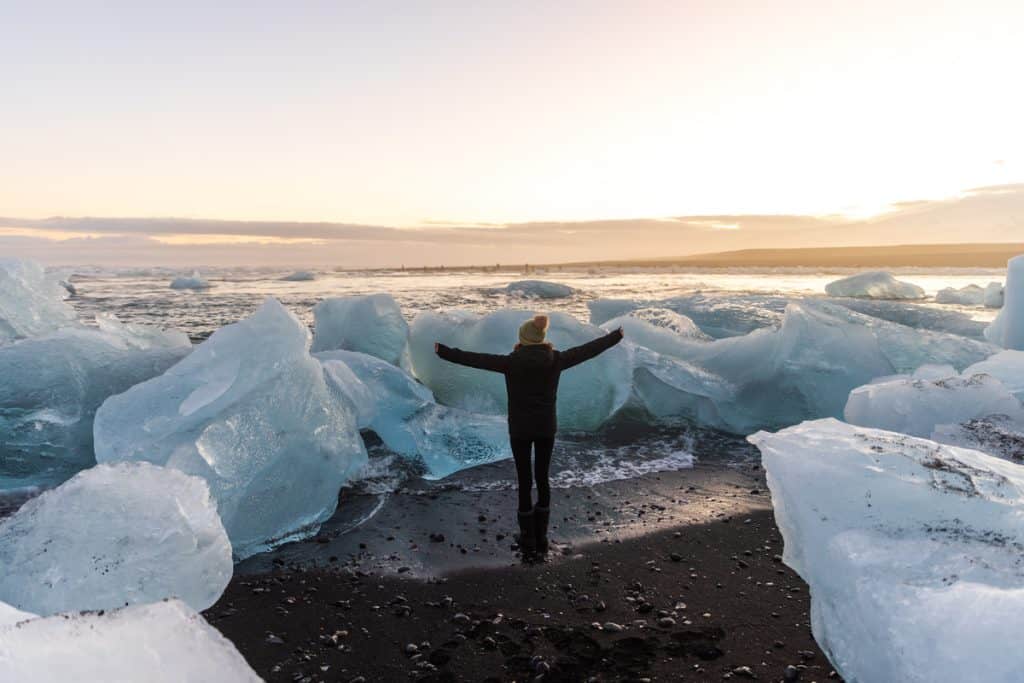
Just across the road from Jökulsárlón is Diamond Beach. It’s a black sand beach that gets covered in all of the ice from Jökulsárlón and it’s such a unique place.
Where to stay:
Stay at Hali Country Hotel again.
Day 7: Back to Reykjavík
Enjoy a leisurely drive back to Reykjavík to catch your flight home.
Vik is a great place to stop for lunch as it’s just off the ring road so you don’t need to detour.
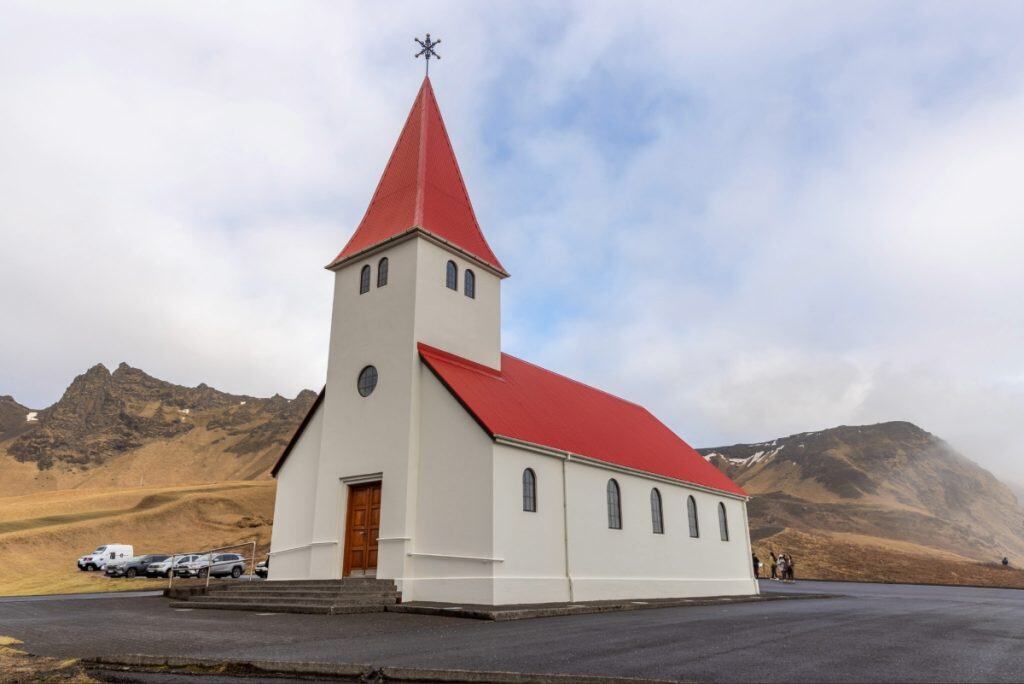
It’s a charming village with some good restaurants (we ate at Black Crust Pizzeria), but it’s most famous for Víkurkirkja Church, its red-roofed church that sits at the top of the hill.
You could even squeeze in one more visit to Reynisfjara beach as it’s only a fifteen minute drive from Vik.
We went twice during our trip and it’s amazing to see it in different weather as it completely changes the vibe.
Read my other Iceland guides:
16 Best Things to Do in Iceland
The Ultimate Iceland Winter Packing List
Renting a Car in Iceland in Winter
9 Best Things to do in Reykjavík